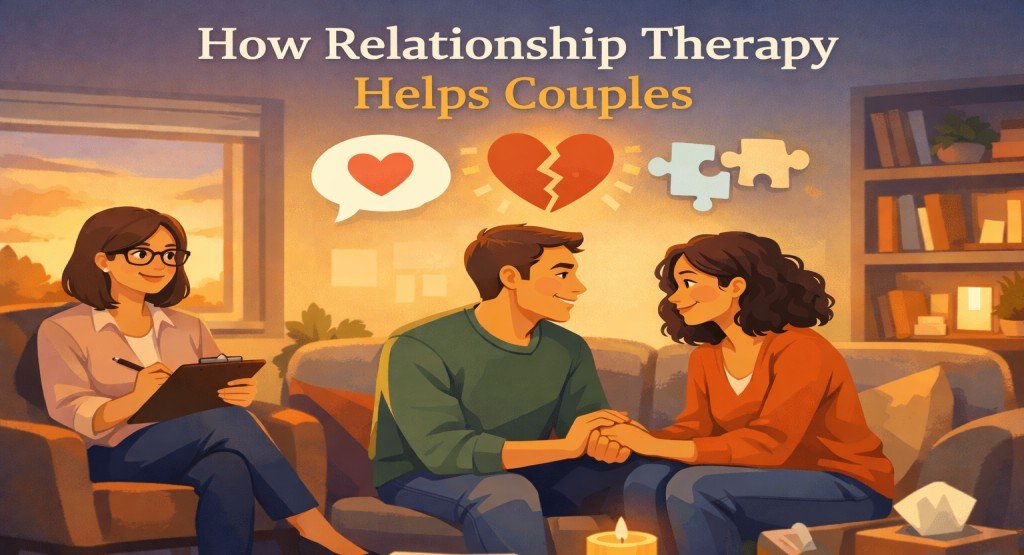
Relationship therapy helps you and your partner improve communication, resolve conflicts, rebuild trust, break negative patterns, deepen emotional intimacy, and heal past wounds. Therapists use proven methods like Emotionally Focused Therapy, the Gottman Method, and Imago Relationship Therapy to achieve these results. Studies show 70-75% of couples see significant recovery, with benefits lasting a year or more.
What Is Relationship Therapy?
Relationship therapy gives you a neutral space to address issues with a trained professional. You learn specific skills to handle disagreements and connect better. Therapists guide you through exercises tailored to your situation. This process typically lasts 8 to 20 sessions, once a week. You practice what you learn at home to make changes stick.
Why Do Couples Need It?
You face common problems like poor communication, resentment buildup, or emotional distance. Money disagreements, infidelity, health issues, or family planning strain your bond. Therapy prevents small issues from growing. Even strong couples use it to build resilience. Seek help within the first six years of problems for best results.
Improves Communication
Therapists teach you to express needs without blame. You practice active listening. You pick the right time for tough talks. This cuts misunderstandings. Partners feel heard. One couple argued daily about chores. They learned “I feel overwhelmed when…” statements. Arguments dropped by half in two months.
Resolves Conflicts Constructively
You identify root causes, not surface fights. Therapists show negotiation and compromise techniques. You move past resentment. No more sweeping issues under the rug. Conflicts become opportunities to understand each other. Research confirms couples gain lasting skills for daily life.
Deepens Emotional Connection
Therapy builds empathy. You explore each other’s perspectives. You foster vulnerability. Intimacy grows. Partners report stronger bonds. You understand emotional needs better. This creates security. Ninety percent of couples keep improvements long-term.
Identifies and Breaks Negative Patterns
Therapists spot cycles like criticism or stonewalling. You learn why they happen, often from past experiences. You replace them with positive interactions. Destructive behaviors fade. Your relationship shifts to healthier dynamics.
Heals Wounds and Rebuilds Trust
After betrayal or neglect, you process pain safely. Therapists guide forgiveness steps. You rebuild security. Infidelity recovery succeeds in 60% of committed cases. Trust returns through consistent actions.
Common Therapeutic Approaches
Emotionally Focused Therapy (EFT)
EFT strengthens your emotional bond. You recognize disconnection cycles. Therapists help you express attachment needs. Seventy to 75% of couples recover from distress. Ninety percent maintain gains.
Gottman Method
This research-based approach builds friendship, manages conflict, and creates shared meaning. You learn to turn toward each other daily. Studies show sustained improvements in satisfaction and intimacy three months post-therapy.
Imago Relationship Therapy
Imago turns conflict into growth. You trace issues to childhood. Dialogue exercises heal unconscious wounds. Couples report higher marital satisfaction and positive emotions.
The Therapy Process Step by Step
You start with an initial assessment. You share history and goals. The therapist maps your interaction patterns. You learn communication and empathy tools. You apply them at home with homework. You review progress and adjust. You plan for maintenance to sustain health. Expect neutrality and confidentiality. Both voices matter equally.
Who Benefits Most?
Couples with health challenges benefit. Therapy eases caregiver burden. Those with money conflicts align on goals. Partners planning families resolve infertility or parenting differences. Couples after infidelity rebuild if both commit. Healthy couples strengthen bonds early. Therapy works for all commitment levels.
Success Rates and Evidence
Couples therapy outperforms no treatment. Seventy to 80% improve significantly. Effects match top individual therapies. Early intervention boosts outcomes. Active participation and homework predict success.
| Approach | Success Rate | Key Outcome |
| EFT | 70-75% recovery | Lasting emotional health |
| Gottman | Sustained gains | Higher intimacy |
| Imago | Improved satisfaction | Better emotional experience |
When to Start and What to Expect
Start now if conflicts repeat or distance grows. Online options work well. Results appear in weeks with effort. Not every couple stays together, but 75% report satisfaction gains.
Frequently Asked Questions
Does insurance cover it? Many plans do. Check yours.
How many sessions? Average 12, but varies.
What if only one wants therapy? Individual sessions can help, but joint works best.
Online or in-person? Both effective. Choose convenience.
Results permanent? Yes, with practice. Ninety percent maintain EFT gains.
You now understand how relationship therapy works. Contact Lumen Health & Psychological Services Inc. to begin.