Ever catch yourself lying in bed thinking, “Something’s off… I feel like my relationship is failing, but am I just overthinking it?” If that hits home, take a breath you’re not the only one. So many people quietly wonder the same thing when small annoyances turn into bigger silences, endless arguments, or that empty feeling inside.
Relationships rarely fall apart overnight. They usually fade slowly through repeated patterns that relationship experts like Dr. John Gottman have studied for decades. His research identifies the “Four Horsemen” of relationship breakdown, criticism, contempt, defensiveness, and stonewalling, with contempt being the strongest predictor of separation, showing over 90% accuracy in many cases. Research also shows that nearly 69% of relationship conflicts are perpetual, meaning they don’t fully disappear and instead require healthy management. Couples Therapy Citrus Heights helps partners recognize these harmful patterns early, develop practical communication tools, and learn how to manage ongoing conflicts in a more supportive, respectful way.
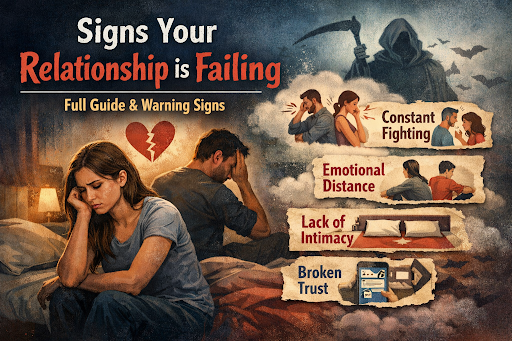
If you’ve been googling “signs your relationship is failing” or “signs a relationship is failing,” this post is for you. We’ll walk through 12 clear signs, explain what they really mean with real examples, and share honest ways to figure out if you can fix things or when it’s time to protect your peace. No blame, just clarity. Let’s dive in.
12 Clear Signs Your Relationship Is Failing
Spotting these patterns isn’t about labeling your partner “bad” or declaring the relationship doomed overnight. It’s about noticing when things have shifted from “we’re in this together” to “I’m not sure we’re even on the same team anymore.” Many of these signs tie back to Dr. John Gottman’s research, where the “Four Horsemen” (criticism, contempt, defensiveness, stonewalling) predict breakup with over 90% accuracy in studies, especially contempt, the biggest killer. Let’s look at 12 common ones that show up when a relationship starts slipping.
1 – Constant, Unproductive Arguments – Fights that never resolve and escalate over tiny things like who forgot to buy milk become exhausting. These aren’t healthy disagreements; they’re cycles of blame without progress. Why it’s a red flag: Unresolved conflict builds resentment and erodes trust. Gottman notes high-conflict patterns (without repair) signal trouble. Example: You argue about chores, it turns personal (“You’re always so lazy!”), and it ends in silence for days. Reflection Question: Do our fights leave us feeling closer or more distant?
2 – Communication Breakdown or Emotional Distance – Conversations feel surface-level or forced. You stop sharing feelings, dreams, or daily stresses. Why it’s a red flag: Emotional disconnection is a core predictor of failurecouples drift apart when vulnerability stops. Example: You used to text all day; now replies are one-word or delayed, and deep talks feel awkward. Quick Fix Tip: Try a “no-phone, 10-minute check-in” daily ask “How are you really feeling?”
3 – Loss of Physical and Emotional Intimacy – Hugs, kisses, sex, or even cuddling fade. It feels like roommates, not lovers. Why it’s a red flag: Studies show declining intimacy links to dissatisfaction; one survey found 15-20% of couples are sexless, often tied to emotional drift. Lack of touch reduces oxytocin (bonding hormone) and amps stress. Example: You go weeks without affection, and attempts feel obligatory. Reflection Question: When was the last time I felt desired or connected physically?
4 – Feeling Unappreciated or Building Resentment – Efforts go unnoticed, thank-yous stop, gratitude fades, small acts feel taken for granted. Why it’s a red flag: Resentment festers like slow poison; unappreciated partners withdraw. Example: You cook dinner every night, but no acknowledgement, just complaints. Quick Fix Tip: Start a “gratitude jar”note one thing you appreciate daily and share weekly.
5 – Avoiding Quality Time Together – You make excuses to be apartextra work hours, solo hobbies, separate plans. Why it’s a red flag: Shared time is glue; avoidance signals disinvestment. Example: Date nights get canceled repeatedly; weekends are “me time” more than “us time.” Reflection Question: Am I excited to spend time with my partner, or relieved when plans fall through?
6 – Secrets, Dishonesty, or Broken Trust – Hiding phone screens, vague answers about whereabouts, or white lies pile up. Why it’s a red flag: Trust is foundational once cracked, rebuilding is hard. Broken trust often predicts dissolution. Example: Discovering hidden messages or financial secrets erodes safety. Quick Fix Tip: Commit to full transparency for a monthshare passwords if needed, rebuild slowly.
7 – Unequal Effort or Support – One person carries the emotional/workload planning, apologizing, initiating everything. Why it’s a red flag: Imbalance breeds burnout and resentment. Example: You’re always the one texting first or fixing fights. Reflection Question: Does the effort feel 50/50, or am I doing most of the heavy lifting?
8 – Fantasizing About Others or Jealousy Issues – Daydreaming about being single/ex with someone else, or intense jealousy over harmless interactions. Why it’s a red flag: Jealousy often stems from insecurity/fear; unchecked, it leads to controlling behavior or emotional distance. Psychology shows irrational jealousy signals deeper issues. Example: Scrolling ex’s socials or feeling threatened by a partner’s coworker. Quick Fix Tip: Journal jealous thoughts ask “Is this fear or fact?” and discuss openly.
9 – Criticism and Contempt Replacing Kindness – Complaints turn personal (“You’re so selfish” vs. “I feel overwhelmed when…”). Contempt shows as sarcasm, eye-rolling, mockery. Why it’s a red flag: Gottman’s #1 predictor of divorce/contempt attacks worth. Example: Jokes that sting, or dismissing a partner’s feelings with “Whatever.” Reflection Question: Do I speak to my partner with respect, or has the tone turned harsh?
10 – Gut Feeling of Unhappiness or “I Feel Like My Relationship Is Failing” – That persistent inner voice saying something’s wrong even if you can’t pinpoint why. Why it’s a red flag: Intuition often spots patterns before logic does; ignoring it leads to bigger pain. Example: You feel lonely even together, or dread going home. Quick Fix Tip: Journal daily moods for a weekpatterns reveal a lot.
11 – No Shared Future Plans or Goals – Talks about tomorrow fade no vacations, kids, moving, or long-term dreams discussed. Why it’s a red flag: Lack of shared vision means drifting apart. Example: Partner dodges “Where do you see us in 5 years?” Reflection Question: Do we still talk excitedly about our future?
12 – Low Self-Esteem or Losing External Friendships/Support – You feel worse about yourself in the relationship, criticism chips away, or isolation from friends/family grows. Why it’s a red flag: Research shows low self-esteem links to staying in unhappy dynamics (fear of rejection) and isolation worsens everything. Example: You cancel friend plans to avoid conflict, or feel “not good enough.” Quick Fix Tip: Reconnecting with one friend this weekoutside perspective helps.
The Psychological Roots of Relationship Failure
Relationships don’t usually fail because of one big blow-up or a single betrayal. More often, they unravel slowly from deeper psychological patterns that build over time. The most researched framework comes from Dr. John Gottman, whose decades of studies on thousands of couples show exactly what erodes the foundation.
Gottman identified the “Four Horsemen of the Apocalypse”four toxic communication styles that predict relationship breakdown with over 90% accuracy if left unchecked:
- Criticism: Attacking character instead of behavior (“You’re lazy” vs. “I feel overwhelmed when chores aren’t shared”).
- Contempt: The deadliest onesarcasm, eye-rolling, mockery, or superiority. Gottman found contempt alone predicts divorce with staggering reliability.
- Defensiveness: Counter-attacking or playing victim instead of owning your part.
- Stonewalling: Shutting down, withdrawing emotionally or physically during conflict.
These aren’t just bad habits; they signal a loss of respect and emotional safety. Gottman’s research also shows that about 69% of relationship problems are “perpetual”rooted in core personality differences or values that never fully resolve. Healthy couples don’t eliminate them; they learn to dialogue around them without letting them poison the bond.
Beyond communication, psychological inflexibility plays a huge rolegetting stuck in rigid thoughts, avoiding discomfort, or letting fear/resentment dictate reactions. Unhealed past wounds, mismatched attachment styles, or chronic stress amplify this, turning small issues into chronic disconnection.
Understanding these roots isn’t about blameit’s about seeing the invisible threads pulling things apart. Spotting them early gives you a real shot at change, whether that’s rebuilding or recognizing it’s time to move on. Now, let’s connect this to the everyday signs that show these patterns in action.
Common Myths About Failing Relationships
One of the biggest hurdles when you’re wondering if your relationship is failing is all the myths floating around that make it harder to see things clearly. These ideas sneak into our heads from movies, friends, social media, or even our own fears, and they can keep us stuck either ignoring real problems or giving up too soon. Let’s bust a few of the most common ones so you can think more honestly about what’s going on.
Myth 1: If you’re in a good relationship, you’ll never argue or have conflict.
This one’s everywhere. People think happy couples are always in sync, never raising their voices. Truth is, conflict is normal even in the strongest relationships. Dr. John Gottman’s research shows that about 69% of problems in couples are perpetual (they never fully go away), and healthy partners learn to manage them instead of avoiding them. Constant fighting might be a sign something’s off, but no fighting at all? That often means emotional distance or one person shutting down. Real connection includes safe disagreements.
Myth 2: No fighting means your relationship is healthy.
The flip sidesome people stay silent to “keep the peace,” thinking quiet equals happy. But silence can hide resentment, unmet needs, or growing apart. If you’re avoiding tough talks because you’re scared of rocking the boat, that’s often a bigger red flag than occasional arguments. Healthy relationships have honest conversations, even when they’re uncomfortable.
Myth 3: If things feel off, it must mean the relationship is doomed and can’t be fixed.
A lot of us jump to “this is failing, time to end it” when doubts creep in. But rough patches don’t always mean failure. Many couples hit low points, stress, life changes, mismatched expectations and come back stronger with effort, communication, or therapy. On the other hand, some myths push people to stay in toxic situations forever, thinking “working on it” fixes everything. Reality: Not every relationship can or should be saved, but assuming it’s hopeless too early robs you of a real chance.
Myth 4: Social media “perfect couples” mean your relationship is failing if it doesn’t look like that.
Scrolling through endless couple goals can make anyone feel like theirs is broken. But those highlight reels hide the real stuffarguments, bad days, therapy sessions. Comparing your behind-the-scenes to someone else’s edited version is unfair and fuels unnecessary doubt.
These myths make it tougher to spot genuine signs your relationship is failing versus normal ups and downs. Once you let them go, it’s easier to face what’s really happening without panic or denial. Ready to move on to the psychological roots or straight into the 12 signs?
Conclusion
We’ve covered a lot from the 12 signs your relationship is failing (like constant unproductive arguments, emotional distance, loss of intimacy, and that persistent gut feeling of “I feel like my relationship is failing”) to the psychological roots like Gottman’s Four Horsemen and practical steps to address them. Recognition really is the first big step. Spotting these patterns early doesn’t mean your relationship is doomed, it means you have clarity and choices.
If these signs resonate, you’re not stuck. Many couples turn things around with honest talks, small daily changes, or professional help. Couples therapy in California (or couples counseling anywhere) can make a real difference, research shows approaches like Emotionally Focused Therapy or Gottman Method help 70-75% of couples improve satisfaction and emotional connection, with benefits lasting years. Whether in-person in places like the Bay Area, Los Angeles, or online teletherapy statewide, licensed therapists offer judgment-free space to rebuild trust, communication, and intimacy.
Take our quick self-assessment quiz below to reflect on your situation. Share your thoughts or story in the comments (we read every one), check out related posts like “How to Rebuild Trust After Betrayal,” or subscribe for more honest relationship tips. Whether you’re working to save things or finding peace in parting ways, prioritize your well-being, you’re not alone, and brighter days are possible.