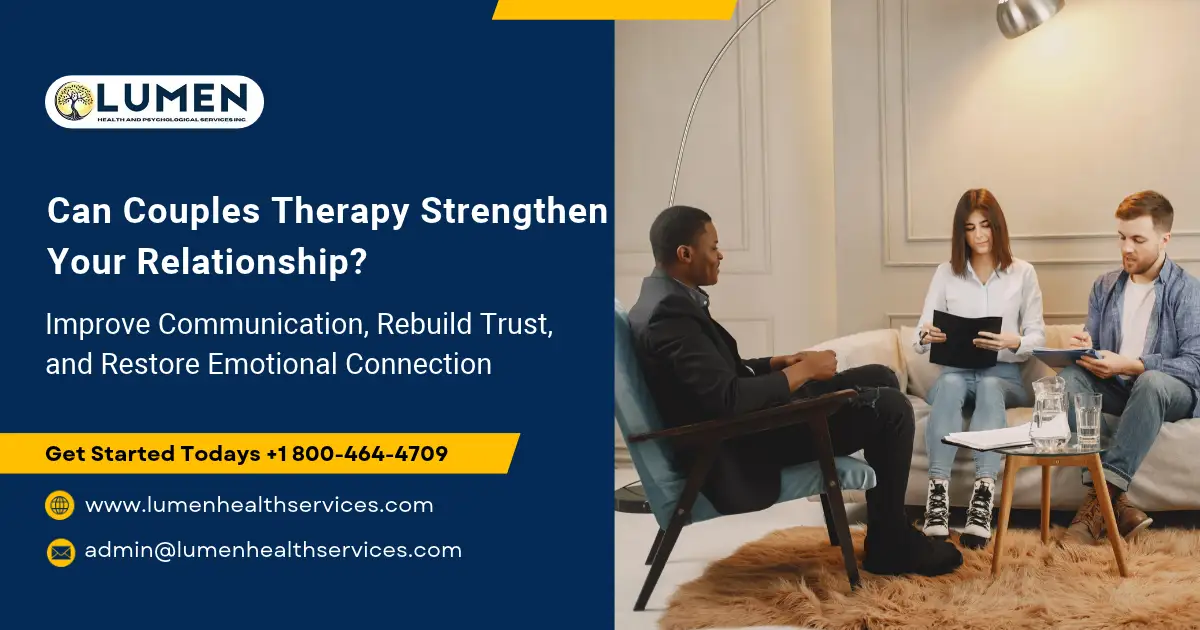
Absolutely, couples therapy can help partners communicate better, end the cycle of conflict, rekindle emotional connection, and solve relationship issues. There are a number of couples therapy methods that have been supported by research, though these can differ based on the issues, method of therapy, and the willingness of the individuals. Therapy can help couples strengthen their relationship, but it cannot guarantee reconciliation or eliminate every problem.
Sometimes, when arguments become regular, conversations don’t produce any real change, trust is gone, and emotional distance grows, many couples opt to see a therapist. Couples counseling provides a structured setting where partners can understand these problems, identify unhealthy patterns, and develop practical ways to improve their relationship.
Does Couples Therapy Actually Work?
Couples therapy can help couples increase their satisfaction within the relationship and teach them new communication and conflict solving skills. There are some interventions that have been shown to help decrease relationship distress, including Behavioral Couples Therapy and Emotionally Focused Couples Therapy.
According to a 2020 meta-analysis of 58 studies across 2,092 couples, there was a significant increase in relationship satisfaction for couples who received therapy. Other areas of improvement that emerged from the research were in communication, emotional closeness, and partner behaviors.
But treatments are not the same for everyone. There are couples who find significant improvement, but others make steady progress or find they require other types of support.
It’s not just about avoiding separation. Good couples’ therapy helps the partners to understand their relationship, to change how they interact with each other and to reach decisions about what they want to do next.
How Effective Is Couples Therapy? What Research Shows
There are several models of couples therapy that are supported by research: behavioral and emotionally focused.
The Journal of Marital and Family Therapy published a meta-analysis of 33 randomized controlled trials with 2,730 participants. It identified moderate improvement in both relationship satisfaction and effectiveness of behavioral couples therapy and emotionally focused couples therapy.
The results indicate that structured couples therapy may be beneficial for the functioning of the relationship for distressed couples. But they also found some flaws, such as publication bias and inconsistent outcome measures across studies.
The results do not necessarily apply to every couple. Research results are the average gains and not a promise for any specific relationship.
Can Couples Therapy Fix a Broken Relationship?
Couples therapy may be helpful when partners are having a problem with their relationship and feel they cannot work it out themselves.
Partners may feel their relationship is broken due to a decrease in communication, resentment, loss of trust, or emotional disconnection. Couples learn to explore the factors that have led to the difficulties and how things can be different in their therapy.
Depending on their circumstances, partners may work toward:
- Rebuilding trust after betrayal or dishonesty
- Improving communication and emotional understanding
- Addressing recurring arguments
- Reconnecting emotionally
- Establishing healthier boundaries
- Resolving disagreements about parenting, finances, or responsibilities
Therapy cannot force either partner to change. Both individuals need to recognize the problems and participate in the process. Even when partners decide not to continue their relationship, counseling may help them communicate more constructively and make decisions with greater clarity.
Powerful Ways Couples Therapy Can Improve Your Relationship
Improve Communication and Reduce Conflict
Couples therapists help partners identify communication patterns, which are raising the tension. Criticism, defensiveness, interrupting, shutting down, and avoiding challenging conversations can stop couples from solving their issues.
Therapy helps partners learn to express their concerns without attacking, how to listen better, and how to meet emotional needs more effectively. These are the skills that can assist couples in having a discussion about disagreement without it becoming an argument.
Rebuild Trust After Infidelity or Betrayal
Infidelity, dishonesty, and broken promises can damage emotional security. Couples therapy can be beneficial for partners to engage in, as it can help them understand the damage caused by the betrayal, discuss who is responsible, and determine what is necessary for them to build trust back up.
It can include setting limits, having open dialogue, discussing undiscussed concerns, and creating patterns of behavior that will foster trust as time goes on.
It will take time to rebuild a trust. While therapy can’t change the event or ensure forgiveness, it can give structure to deal with the hurt.
Restore Emotional Intimacy and Connection
Emotional distance can form as partners stop sharing their feelings, don’t feel vulnerable, or feel misunderstood.
In therapy, couples can examine their feelings and discuss patterns of emotional withdrawal or disconnection, and learn new ways to express affection and support.
As partners engage in new interactions, they can start to feel more understood, valued, and emotionally connected.
Resolve Recurring Relationship Problems
Many couples repeatedly argue about the same issues without reaching a solution. Such conflicts can be about household chores, money, parenting, bedroom issues, or expectations.
A therapist assists partners in unearthing the concerns that drive them to argue. Rather than just determining who is right, couples gain an understanding of each other’s points of view and find a realistic solution.
How Does Couples Therapy Work?
Couples therapy focuses on the relationship and the interaction patterns that contribute to distress.
During the initial sessions, the therapist typically explores the relationship history, current concerns, each partner’s perspective, and treatment goals. The therapist may also assess emotional safety and individual concerns that affect the relationship.
Depending on the treatment approach, sessions may involve:
- Identifying negative interaction patterns
- Practicing communication and active listening
- Exploring emotional needs and expectations
- Developing conflict-resolution strategies
- Addressing trust and intimacy concerns
- Setting goals and practicing skills between sessions
Evidence-based approaches may include Emotionally Focused Couples Therapy (EFT), Behavioral Couples Therapy, and Integrative Behavioral Couples Therapy. The therapist selects an approach based on the couple’s concerns, goals, and clinical needs.
When Is Couples Therapy Most Effective?
Couples therapy may be more productive when both partners participate honestly, remain open to feedback, and practice new skills outside sessions.
There does not have to be complete agreement before beginning treatment. But they must have some openness to look at the relationship and think of how they can respond to one another.
Early intervention can also help to keep future issues from setting in. It’s not necessary for couples to wait until they are thinking about separating to seek professional assistance.
Does Couples Therapy Work If One Partner Is Unwilling?
When one person is afraid to be blamed, or is skeptical or reluctant to engage in couple’s therapy, it can become difficult. Such worries are frequent and do not indicate that the relationship is not able to get better.
A partner might think therapy will take sides, bring up personal problems or make decisions for them. A therapist will be able to discuss these concerns with a couple and be able to tell them how counselling works.
If it is not possible for one person to attend, the partner could look at individual therapy sessions to learn about themselves, their communication style and the choices they make in their relationship.
How Long Does Couples Therapy Take to Work?
Couples therapy isn’t time-limited. Some partners notice improvements in communication or conflict management within the first few sessions. Others will require more time to work out past resentment, trust problems, emotional disconnect, or relationship issues.
Treatment time will vary based on issues, desired outcomes, treatment frequency and how involved each person is.
Therapy may lead to fewer escalating arguments, more productive conversations, more understanding of emotions, and an ability to resolve disagreements.
Is Couples Therapy Worth It If You Are Considering Separation?
Couples therapy may help partners who feel uncertain about staying together. Counseling does not require a commitment to remain in the relationship.
Partners can use therapy to understand their concerns, explore whether meaningful change is possible, discuss their expectations, and make informed decisions about their future.
The therapist supports the process without forcing either partner to reconcile or separate.
When Couples Therapy May Not Be Appropriate
Couples therapy may not be appropriate when a relationship involves domestic violence, coercive control, threats, or fear of retaliation. Joint sessions can create additional risks in these situations.
A qualified professional should assess safety and recommend appropriate individual support or specialized services before considering joint therapy.
Strengthen Your Relationship With Professional Couples Therapy
Relationship challenges can affect emotional health, communication, trust, and everyday life. Professional couples therapy offers partners an opportunity to understand these challenges and develop healthier ways to interact.
At Lumen Health Services, couples therapy provides a supportive environment to address relationship concerns, improve communication, and work toward meaningful change. Whether you are experiencing recurring arguments, emotional distance, trust concerns, or uncertainty about your relationship, professional support can help you understand your next steps.
Take the first step toward healthier communication and a stronger relationship. Contact Lumen Health Services to learn more about couples therapy.
FAQ’s
Yes. Research supports several couples therapy approaches for improving relationship satisfaction, communication, and emotional intimacy. Outcomes vary depending on the couple’s concerns, treatment approach, and participation.
Couples therapy can help partners address conflict, rebuild trust, improve communication, and reconnect emotionally. However, it cannot guarantee reconciliation or force either partner to change.
Research reviews have reported that approximately 60% to 80% of distressed couples benefit from behavioral or emotion-focused approaches. These estimates come from research settings and should not be interpreted as a guaranteed success rate for every couple.
Some couples notice changes within a few sessions, while others need several months. Treatment duration depends on relationship concerns, goals, and participation.
Therapy may be more difficult when one partner is unwilling, but hesitation does not automatically make improvement impossible. Individual therapy may also help a willing partner understand their needs and relationship patterns.
Therapy may help couples explore their concerns, improve communication, and make informed decisions about whether to continue their relationship. It does not require partners to stay together.
Couples therapy may help partners address the emotional impact of infidelity, discuss accountability, establish boundaries, and determine whether rebuilding trust is possible.
The therapist typically discusses relationship history, current concerns, each partner’s perspective, treatment goals, and expectations for counseling. The first session helps establish a foundation for treatment.
Couples may benefit from therapy when they experience recurring conflict, emotional distance, trust concerns, communication problems, or difficulty resolving important disagreements. Seeking help before a relationship reaches crisis may provide more opportunities to address concerns.
Therapy may temporarily bring uncomfortable emotions or unresolved concerns to the surface. A qualified therapist should manage these conversations carefully and assess whether joint sessions are appropriate, particularly when safety concerns exist.