

Teenagers can experience anxiety, academic pressure, friendship problems, family conflict, and major emotional changes while growing up. While it’s natural for teens to experience stress, there are some that are continuing to change their mood, behavior, sleep patterns, school performance, or relationships that may warrant professional assistance.
If these warning signs are spotted early, Sacramento parents will find it easier to get a teen connected with a qualified teen therapist before the emotional problems start to get in the way of life.
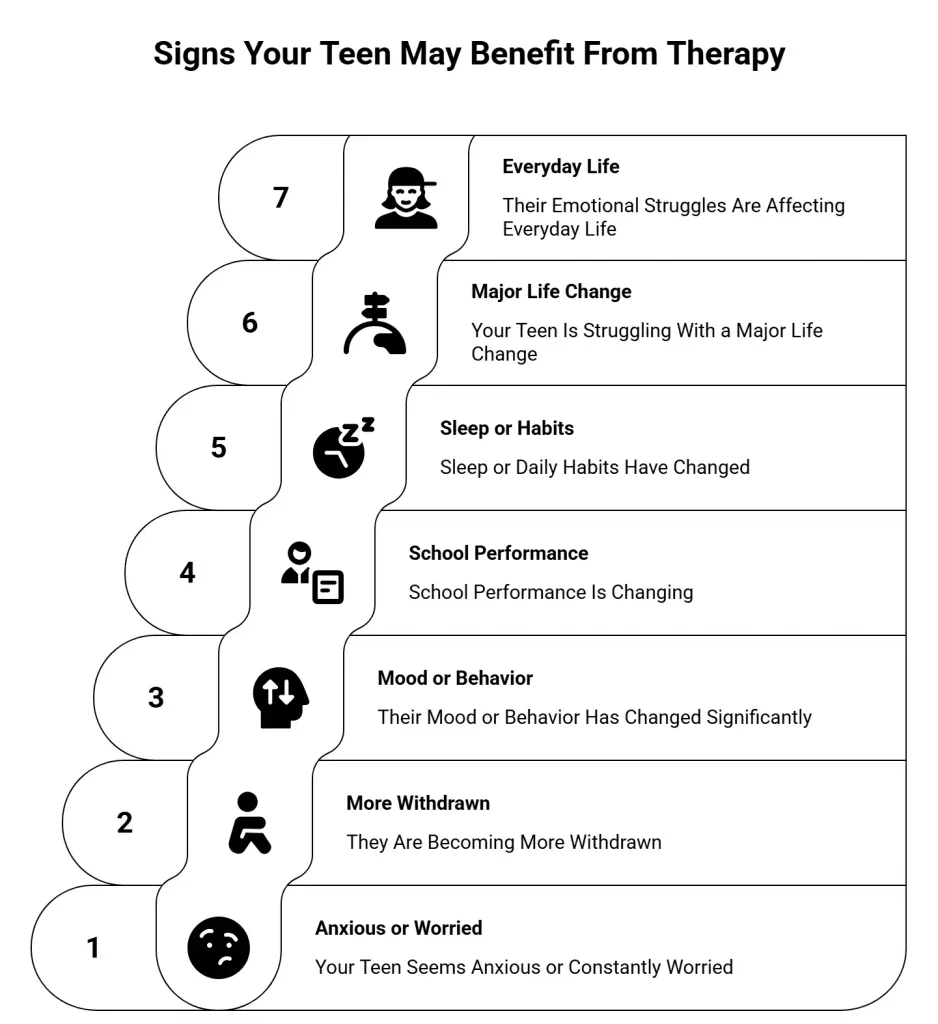
1. Your Teen Seems Anxious or Constantly Worried
Some anxiety is normal during the teenage years. But if the anxiety is ongoing, and is impacting on school, friendships, family life, sleep, or activities, then it should be addressed.
Teens often fear about grades, socializing, looks, family issues, life plans, or getting things wrong. Anxiety can also cause physical symptoms like headaches, stomachaches, restlessness or trouble sleeping.
Teen therapy can provide teenagers with a safe and supportive space to explore the root causes of their concerns and learn effective stress management techniques.
2. They Are Becoming More Withdrawn
Some teenagers naturally want more privacy and independence. A change in social behaviour that is noticeable or lasting may be different.
Parents may see that their teen doesn’t hang out with friends, doesn’t enjoy family activities, doesn’t enjoy hobbies, or spends a lot more time alone.
Social withdrawal can have many possible causes, including stress, anxiety, depression, bullying, relationship problems, or difficulty adjusting to a major life change. A teen therapist will be able to help discern what could be a factor in the change.
3. Their Mood or Behavior Has Changed Significantly
Teenagers can experience strong emotions, but persistent or major changes should not automatically be dismissed as “just teenage behavior.”
Parents might see their teen being more irritable, down, angry, having outbursts, feeling hopeless, or not interested in things they used to like.
Teens can learn to navigate these emotional shifts and develop coping skills, communication, emotional regulation and problem-solving skills during therapy.
4. School Performance Is Changing
A sudden decline in grades, attendance, motivation, concentration, or participation can sometimes signal that a teenager is struggling emotionally.
Academic difficulties may be connected to anxiety, depression, social problems, family stress, sleep difficulties, bullying, or pressure about future plans.
Rather than focusing only on grades, parents can consider what may have changed in their teen’s overall life. A teen therapist can help teens recognize emotional or behavioral issues they are having that may be impacting their school performance.
5. Sleep or Daily Habits Have Changed
Changes in sleep can occur during adolescence, but significant or persistent changes may be worth discussing with a professional.
For example, a teenager may regularly struggle to fall asleep, sleep much more than usual, have difficulty getting out of bed, or experience major changes in appetite and daily routines.
If these changes are accompanied by anxiety, sadness, irritability, withdrawal or poor schoolwork, professional help might be needed.
6. Your Teen Is Struggling With a Major Life Change
Teenagers may need additional support when their family or personal circumstances change.
Examples can include:
- Parents separating or divorcing
- Moving to a new home or school
- Loss of a loved one
- Family conflict
- Friendship or relationship changes
- Bullying
- Academic pressure
- Significant changes within the family
Therapy can help teens process difficult experiences, express emotions, build coping skills, and adjust to circumstances they may not know how to handle on their own.
7. Their Emotional Struggles Are Affecting Everyday Life
One of the most important signs is when emotional or behavioral difficulties begin interfering with a teenager’s daily functioning.
Parents might observe issues with school, peer relationships, family life, sleep, self-care, pastimes, or other daily routines.
Don’t wait until your problem is out of hand to seek assistance. A teen therapy expert can evaluate what your teen is going through and decide if some type of support might be needed.
What Can a Teen Therapist Help With?
Teen therapists can work with adolescents experiencing a range of emotional, behavioral, and life challenges. Depending on the teenager’s needs, therapy may address:
- Anxiety and excessive worry
- Depression and persistent sadness
- School and academic stress
- Family conflict
- Social difficulties
- Low self-esteem
- Emotional regulation
- Grief and loss
- Major life transitions
- Trauma and difficult experiences
- Relationship concerns
- Stress and coping difficulties
The specific approach depends on the teenager, their concerns, developmental stage, and treatment goals.
How Can Parents Encourage a Teen to Try Therapy?
If teenagers feel as though their parents are sending them to therapy because something is “wrong” with them, they might resist it.
It is better to explain that therapy is a place where they can discuss with a trained therapist anything going on in their life. Parents can also afford their teen some involvement in the process, such as in choosing a therapist, or discussing with their teen what they want from counseling.
It can also help to avoid presenting therapy as a punishment or threat.
When Should Parents Seek Teen Therapy in Sacramento?
Consider speaking with a mental health professional when emotional, behavioral, or social changes persist, become more intense, or interfere with everyday life.
Parents should seek immediate professional help if they are concerned that their teenager may hurt themselves, hurt someone else, or is experiencing another mental health emergency. In an immediate emergency, call 911 or go to the nearest emergency department.
Finding a Teen Therapy Specialist in Sacramento, CA
Finding the right therapist can make the process more comfortable for both parents and teenagers. Look for a licensed mental health professional who has experience working with adolescents and understands the concerns affecting your teen.
You can also inquire about the therapist’s experience with your teen’s particular issues, treatment, communication with parents, confidentiality and whether they have in-person or online sessions.
Lumen Health & Psychological Services provides mental health therapy for children and teens, with support tailored to each person’s individual needs.
If your teenager is struggling with anxiety, mood changes, school stress, family conflict, social difficulties, or another emotional concern, professional support may help. Lumen Health & Psychological Services offers therapy for teens with care tailored to their individual needs.
Frequently Asked Questions
Consider therapy when emotional or behavioral changes persist, become difficult to manage, or begin affecting school, relationships, sleep, or everyday activities.
Teen therapy can address concerns such as anxiety, depression, school stress, family conflict, grief, low self-esteem, trauma, relationship difficulties, and problems adjusting to life changes.
Parents may have a role in treatment, depending on the teenager’s age, clinical needs, treatment approach, and applicable confidentiality requirements. A therapist can explain how parent involvement works before treatment begins.
Confidentiality for adolescents depends on factors such as age, state law, clinical circumstances, and safety concerns. Parents and teens should discuss confidentiality and its limits with the therapist at the beginning of treatment.
Look for a qualified mental health professional with experience providing therapy to adolescents. Consider their areas of specialization, treatment approach, availability, and whether their services fit your teenager’s needs.