Relationships are a central part of our emotional well-being, yet even the strongest partnerships can face challenges. Miscommunication, emotional distance, repeated conflict, or major life changes can strain a relationship over time. When these issues begin to feel overwhelming or stuck, many people consider relationship therapy, but often wonder first: what does a relationship therapist do?
A relationship therapist is a trained mental health professional who helps couples and individuals improve relationship health, communication, and emotional connection. Their role is not to judge or take sides, but to support understanding, growth, and healthier interaction patterns.
The Purpose of Relationship Therapy
The primary goal of relationship therapy is to help people understand how they relate to one another and how those patterns affect emotional safety, trust, and intimacy. Therapy provides a neutral and confidential space where concerns can be discussed openly, without blame or defensiveness.
Relationship therapists work not only with couples in crisis but also with partners who want to strengthen their bond, navigate transitions, or prevent small issues from becoming larger problems. Individuals may also seek relationship therapy on their own to gain clarity about a current or past relationship.
Improving Communication
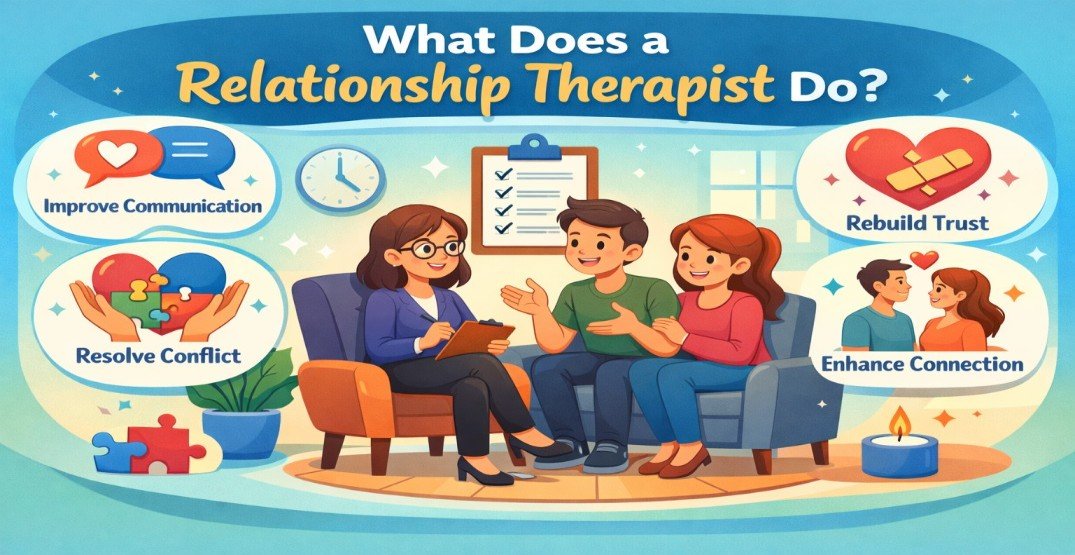
One of the most important things a relationship therapist does is help improve communication. Many relationship problems stem from feeling unheard, misunderstood, or emotionally dismissed. A therapist teaches practical skills to help partners express needs clearly, listen without defensiveness, and respond with empathy rather than reaction.
This often involves slowing conversations down, identifying emotional triggers, and learning how to discuss difficult topics without escalating into arguments or shutdowns.
Identifying Negative Relationship Patterns
Relationship conflicts are rarely about a single issue. Instead, they often follow repeated patterns that develop over time. A relationship therapist helps identify these patterns, such as cycles of criticism and withdrawal, avoidance of difficult conversations, or recurring power struggles.
By bringing awareness to these dynamics, therapy helps partners understand not just what they fight about, but why the same conflicts keep happening. This insight is essential for creating lasting change.
Helping Resolve Conflict
Relationship therapists also help couples resolve conflict in healthier ways. Rather than focusing on who is right or wrong, therapy explores the underlying concerns driving disagreements. These may include issues related to trust, finances, intimacy, parenting, or unmet emotional needs.
The therapist acts as a guide, helping partners communicate respectfully, explore different perspectives, and find solutions that feel fair and sustainable for both people.
Strengthening Emotional and Physical Connection
Beyond managing conflict, relationship therapy focuses on strengthening emotional bonds. Over time, stress, resentment, or unresolved issues can lead to emotional distance or loss of intimacy. A relationship therapist helps partners reconnect by fostering empathy, vulnerability, and emotional safety.
This may involve rebuilding trust after betrayal, improving emotional responsiveness, or addressing intimacy and sexual concerns in a respectful and supportive way.
Providing a Neutral and Safe Space
A key role of a relationship therapist is maintaining neutrality. The therapist does not take sides or assign blame. Instead, they ensure that both partners feel heard and respected. This balanced approach helps create a sense of safety, making it easier to discuss sensitive topics that might otherwise feel too risky.
All sessions are confidential, allowing individuals and couples to speak openly without fear of judgment.
Common Issues Relationship Therapists Help With
Relationship therapists commonly work with concerns such as:
- Ongoing arguments or communication breakdowns
- Infidelity and trust repair
- Emotional or physical intimacy issues
- Financial stress and decision-making conflicts
- Parenting disagreements
- Family or in-law boundary issues
- Life transitions such as marriage, relocation, or separation
- Anxiety, depression, or trauma affecting the relationship
Can One Person See a Relationship Therapist Alone?
Yes. Relationship therapy is not limited to couples attending together. Individuals may seek therapy to understand relationship patterns, improve communication skills, set healthy boundaries, or gain clarity about whether and how to move forward in a relationship. Even when one partner is not ready for therapy, individual work can still be highly beneficial.
Conclusion
A relationship therapist helps individuals and couples improve communication, resolve conflict, and build stronger emotional connections. At Lumen Health & Psychological Services Inc, therapy offers a supportive, neutral space to gain clarity, strengthen relationships, and support lasting emotional well-being.