
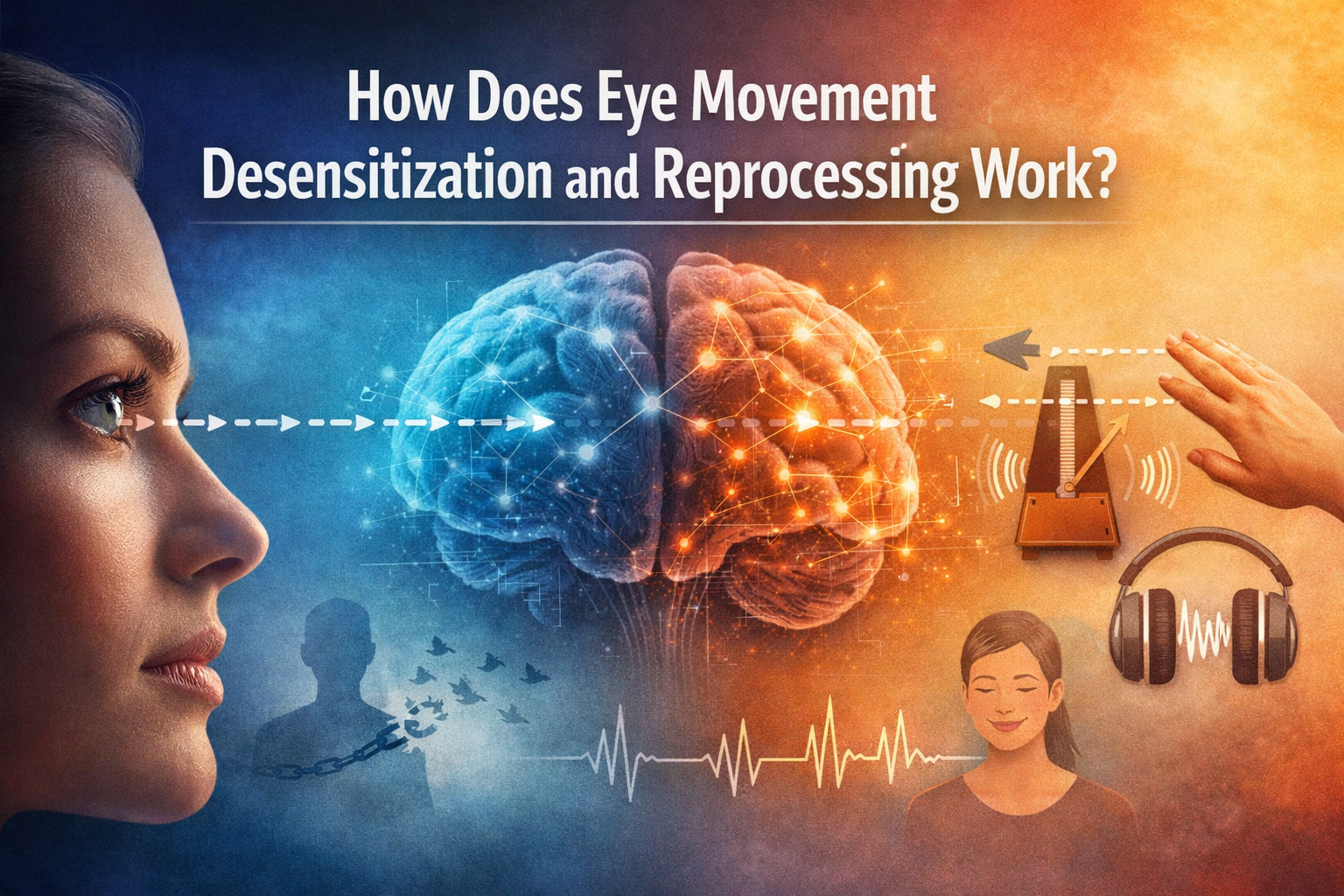
Eye movement desensitization and reprocessing works by activating the brain’s natural memory processing system while you briefly focus on a distressing memory and engage in bilateral stimulation such as guided eye movements, tapping, or tones. This combination allows the brain to reprocess the memory so it no longer triggers intense emotional or physical reactions. The memory remains, but it loses its power. The event shifts from feeling present and overwhelming to feeling past and manageable.
What Is EMDR Therapy in Simple Terms?
EMDR is a structured form of psychotherapy designed to help your brain finish processing experiences that never fully resolved. After trauma or overwhelming stress, the brain can store memories in a raw, unprocessed form. These memories stay linked to strong emotions, body sensations, and negative beliefs about yourself.
EMDR helps the brain reorganize those memories. Instead of remaining frozen in a survival state, the memory becomes integrated into normal long-term storage. When this happens, the distress fades and your perspective changes naturally.
Why Traumatic Memories Get Stuck in the Brain
Under normal conditions, the brain processes experiences and stores them as complete memories with context, time, and meaning. You remember what happened, but you do not relive it.
During trauma, the nervous system shifts into survival mode. The brain prioritizes immediate protection over reflection. This can interrupt normal processing.
As a result:
- The memory is stored in fragments.
- The emotional charge stays high.
- The body continues to react as if danger is present.
This is why certain sights, sounds, smells, or situations can trigger intense reactions long after the event has ended.
Also read: What Are The 4 Types Of Family Therapy?
The Brain’s Natural Healing System
The brain has an inherent ability to move experiences toward resolution. Clinicians refer to this as adaptive information processing. When this system works properly, new experiences link with existing knowledge and healthy beliefs.
Trauma can block that system. EMDR removes the block.
What Is Bilateral Stimulation and Why Is It Used?
Bilateral stimulation involves rhythmic left-right activation of the brain. This may occur through eye movements, alternating taps, or alternating tones.
While you hold a memory in mind, bilateral stimulation keeps part of your attention anchored in the present. This dual attention state allows the brain to access the memory without becoming overwhelmed.
The stimulation also reduces emotional intensity and increases the brain’s ability to form new connections.
How Bilateral Stimulation Affects the Brain
Research suggests bilateral stimulation lowers activity in the brain’s fear centers while increasing communication between emotional and reasoning regions. This creates the conditions needed for memory integration.
A helpful way to understand this is through REM sleep. During REM sleep, the brain naturally processes emotional experiences. Bilateral stimulation appears to engage similar mechanisms while you are awake.
The result is faster and more complete processing.
How EMDR Reprocesses a Traumatic Memory
During EMDR, you briefly bring a distressing memory to mind. You notice the image, the negative belief about yourself, the emotions, and the body sensations connected to it.
You then engage in bilateral stimulation.
Your brain begins making spontaneous associations. New thoughts, images, and insights emerge without forced analysis. Emotional intensity steadily decreases.
Over repeated sets:
- The memory loses vividness.
- Body tension softens.
- New meanings form.
The brain shifts the memory from a danger network to a narrative memory. You still remember what happened. You no longer relive it.
What Does EMDR Feel Like During a Session?
Experiences vary.
You may notice images, emotions, thoughts, or body sensations. Some people feel waves of emotion. Others feel neutral but notice cognitive shifts.
Most people report:
- Decreasing distress
- Increased distance from the memory
- Clearer perspective
- A sense of relief
You remain aware and in control throughout the session.
How Long Does EMDR Take to Work?
Single incident trauma may resolve in a small number of sessions. Complex or developmental trauma usually requires longer treatment.
Speed depends on:
- Nature of the trauma
- Number of target memories
- Current stability
- Coexisting mental health conditions
EMDR often progresses faster than traditional talk therapy because it directly targets memory networks.
Is EMDR Safe for Everyone?
EMDR is safe when delivered by a trained clinician.
Some individuals need extended preparation before processing begins, especially if they experience dissociation, severe instability, or active substance misuse.
A thorough assessment determines readiness.
FAQ’s
Is EMDR hypnosis?
No. You remain awake, aware, and in control.
Do I have to describe details?
No. You can process without verbalizing graphic content.
Can EMDR be done online?
Yes. Many clinicians provide EMDR via telehealth using adapted protocols.
Is EMDR evidence-based?
Yes. Dozens of controlled studies support its effectiveness for trauma.
Will I lose control?
No. You can stop at any time.
How EMDR Helps the Brain Heal
EMDR works because the brain has a built-in capacity to heal when the right conditions are present. Bilateral stimulation combined with focused attention allows distressing memories to move out of survival storage and into normal long-term memory. Emotional intensity decreases. Physical tension eases. Negative beliefs shift into more accurate, adaptive truths.
You remember what happened. You no longer relive it.
At Lumen Health and Psychological Services Inc., EMDR is used with care, precision, and clinical judgment to help you process unresolved experiences safely and effectively. When trauma no longer controls your nervous system, you gain clarity, stability, and a stronger sense of control over your life.