
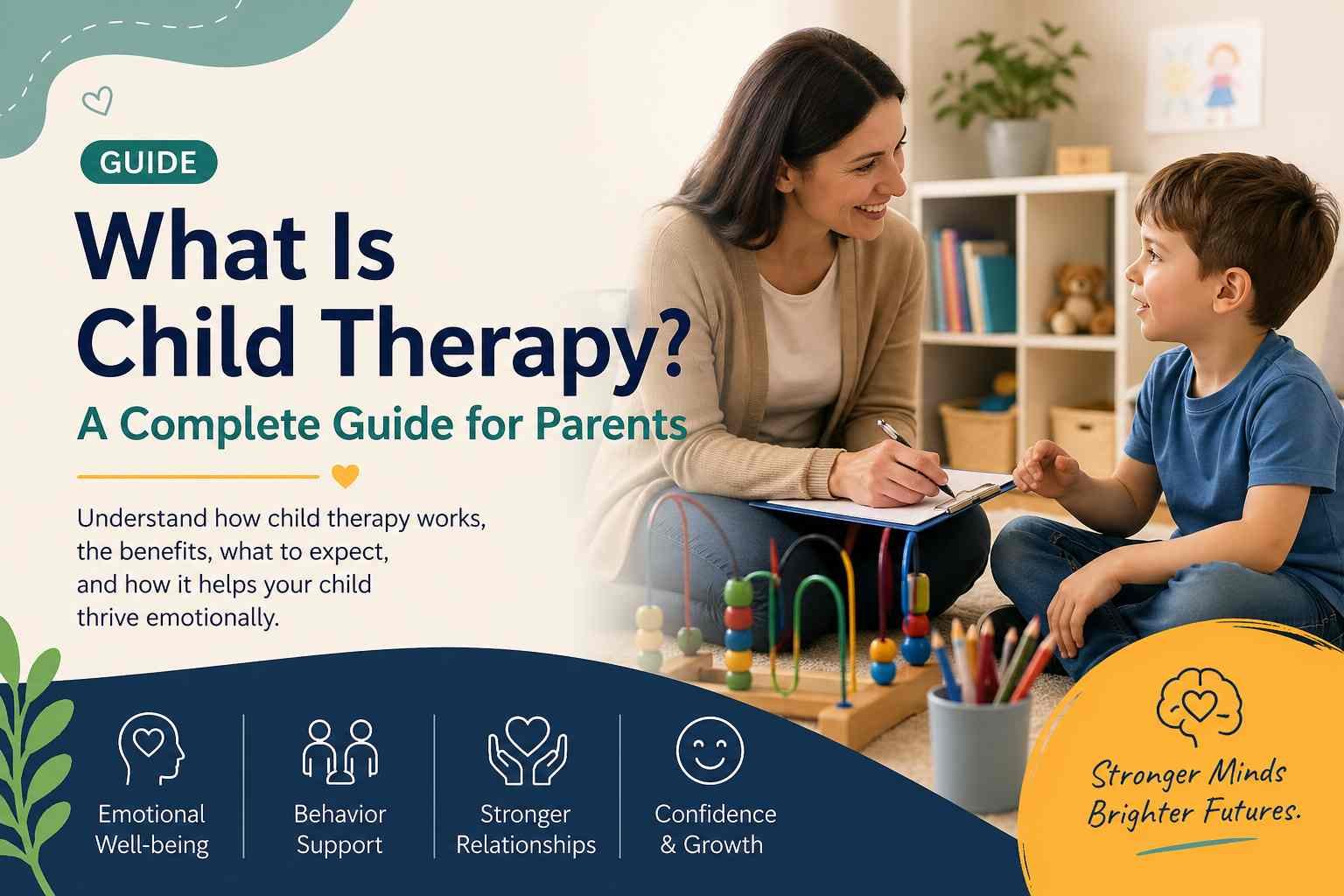
Child therapy is a structured form of mental health support that helps children understand their emotions, improve behavior, and develop coping skills through guided interaction with a trained therapist. Child therapy uses age-appropriate methods such as play, conversation, and creative activities to help children express what they often cannot say directly. The focus is not only on behavior but also on the emotional processes behind it.
Why Does Child Therapy Matter for Emotional Development?
Children do not process emotions the way adults do. Their brains are still developing, especially areas responsible for regulation, impulse control, and decision-making. When your child feels anxious, overwhelmed, or upset, they often show it through behavior rather than words.
If these signals go unaddressed, patterns can become stronger over time. Anxiety can turn into avoidance. Frustration can turn into aggression. Low confidence can shape how your child views themselves and others. Early support helps prevent these patterns from becoming long-term difficulties. Therapy builds emotional awareness and regulation while your child’s brain is still adaptable.
Also Read: What are the 4 Types of Family Therapy?
What Does Child Therapy Actually Look Like in Practice?
Child therapy looks very different from adult therapy. Your child will not be expected to sit and explain their feelings in a formal way. Most children communicate through play, movement, and imagination.
During sessions, your child may play with toys, draw, tell stories, or engage in simple games. These activities are purposeful. A trained therapist uses them to understand how your child experiences emotions and situations. For example, a child dealing with fear may express it through stories or play themes. A child struggling with anger may show control or conflict during activities.
The therapist uses these patterns to guide your child toward healthier ways of expressing and managing emotions. The goal is to create a safe environment where your child feels understood without pressure.
Also Read: Types of Couples Therapy Explained
How Does Child Therapy Work Step by Step?
Child therapy follows a structured process, even though it may appear relaxed.
It begins with an initial assessment where the therapist gathers information about your child’s emotional patterns, behavior, family environment, and daily functioning. This helps identify the root cause of concerns rather than focusing only on symptoms.
The next step focuses on building trust. Without a sense of safety, your child will not engage meaningfully. Once trust is established, therapy sessions begin to address emotional and behavioral patterns using age-appropriate techniques.
As therapy progresses, your child learns practical skills such as identifying emotions, managing reactions, and responding more effectively to challenges. At the same time, you receive guidance on how to support your child at home. This consistency strengthens the overall impact of therapy.
Also Read: How Much Does Couples Therapy Cost?
What Issues Can Child Therapy Help With?
Child therapy addresses a wide range of emotional and behavioral concerns by focusing on underlying causes.
- Anxiety, fear, and excessive worry
- Behavioral challenges such as aggression or defiance
- Difficulty regulating emotions
- Trauma and stressful life events
- Social difficulties and friendship problems
- School-related stress or avoidance
- Low self-esteem and confidence
These issues often connect to how your child processes and expresses emotions. Therapy improves that core process.
How Do You Know If Your Child Needs Therapy?
You do not need a diagnosis to consider therapy. You need to notice patterns that persist and affect daily life.
If your child shows ongoing changes such as withdrawal, irritability, frequent tantrums, sleep difficulties, or reluctance to attend school, it may indicate emotional distress. Short-term reactions to stress are normal. Persistent patterns that do not improve on their own usually require support.
Your observation as a parent is important. If something feels consistently off, it is worth addressing early.
What Happens in the First Child Therapy Session?
The first session focuses on understanding your child and your concerns. The therapist observes how your child interacts, responds to a new environment, and communicates.
Your child is not pressured to talk or behave in a certain way. The therapist creates a calm and low-pressure space where your child can engage at their own pace. You also share your observations, concerns, and goals. This information helps shape the direction of therapy.
What Are the Key Benefits of Child Therapy?
Child therapy leads to meaningful improvements in emotional and behavioral functioning.
Your child learns to recognize emotions instead of reacting impulsively. This leads to better control over behavior and responses. Communication improves as your child becomes more able to express needs and feelings clearly.
Over time, you may notice increased confidence, reduced anxiety, and healthier relationships. These changes develop gradually and provide a strong foundation for long-term well-being.
What Are Common Myths About Child Therapy?
Many parents delay therapy due to common misconceptions.
Some believe children are too young to benefit from therapy. In reality, younger children often respond well because their emotional patterns are still forming. Others think therapy is only for severe problems, but most children benefit from support with everyday emotional challenges.
Some parents worry that seeking therapy reflects failure. It does not. It shows awareness and a willingness to support your child effectively.
What Role Do Parents Play in Child Therapy?
Your involvement plays a central role in your child’s progress. Therapy does not work in isolation because your child spends most of their time with you.
The therapist provides you with practical strategies to respond to your child’s emotions and behavior. When you apply these consistently, your child learns faster and maintains progress outside sessions.
You do not need to be perfect. Consistency and understanding are what make the difference.
Is Child Therapy Effective for Long-Term Results?
Child therapy is effective when it addresses emotional patterns and includes consistent support from both the therapist and the parent.
Progress is gradual. You may first notice small changes such as reduced intensity of reactions or improved communication. Over time, these changes become stable patterns that improve overall behavior, emotional regulation, and relationships.
What Happens If You Delay Child Therapy?
Delaying support allows emotional and behavioral patterns to become more established.
A child who avoids situations due to anxiety may begin to withdraw from more areas of life. A child with behavioral challenges may develop stronger habits that are harder to change later.
Early intervention is more effective because your child’s brain is still developing and adapting. Addressing concerns early reduces long-term difficulty.
Is Online Child Therapy as Effective as In-Person?
Online child therapy can be effective for many children, especially those who feel comfortable at home. It allows for consistent sessions and removes barriers such as travel.
However, some children benefit more from in-person interaction, particularly if they need more structured support or have difficulty focusing online. The choice depends on your child’s needs and engagement level.
How Do You Choose the Right Child Therapist?
Choosing the right therapist involves evaluating experience, approach, and connection.
The therapist should have training in child development and use methods appropriate for your child’s age. Just as important, your child should feel comfortable and safe with them.
A strong therapeutic relationship directly affects how well therapy works.
When Should You Start Child Therapy?
You should consider therapy when you notice consistent emotional or behavioral concerns that affect your child’s daily life.
You do not need to wait for a crisis. Early support leads to better outcomes because it helps your child develop healthy emotional patterns before challenges become deeply ingrained.
FAQs
How long does child therapy usually take?
The duration depends on your child’s needs and how they respond to therapy. Some children improve within a few weeks for specific concerns, while others may need several months for deeper patterns. Consistency plays a key role in progress.
How often should my child attend therapy sessions?
Most children attend sessions once a week at the beginning. This helps build trust and maintain progress. Frequency may reduce over time as your child improves.
Will my child be forced to talk during therapy?
No. Therapists do not force children to talk. Children express themselves through play, drawing, or other activities, which helps them communicate naturally.
How do I explain therapy to my child?
Keep it simple and reassuring. Tell your child they are meeting someone who helps kids understand feelings and solve problems. Avoid framing it as punishment.
Will I be involved in my child’s therapy?
Yes. Your involvement is essential. The therapist may include you in sessions or provide guidance to support your child at home.
Is child therapy confidential?
Therapists maintain confidentiality to build trust with your child, while still keeping you informed about progress and important concerns.
Can child therapy help with school-related problems?
Yes. Therapy helps children manage anxiety, improve focus, and develop social skills, which supports better performance in school.
What is the difference between a child therapist and a child psychiatrist?
A child therapist focuses on emotional and behavioral support through therapy. A child psychiatrist is a medical doctor who can prescribe medication if needed.
Is online child therapy effective?
Online therapy works well for many children, especially when they feel comfortable at home. Some children may benefit more from in-person sessions depending on their needs.
What if my child resists going to therapy?
Resistance is common at first. With time, consistency, and a supportive approach, most children become more comfortable and engaged.
How will I know if therapy is working?
You will notice gradual improvements such as better emotional control, improved behavior, and clearer communication.
When should I stop child therapy?
Therapy ends when your child can manage emotions and behavior more independently. The therapist will guide this process and may suggest follow-up sessions.
Final Thoughts
Child therapy helps your child understand emotions, respond more effectively, and feel more secure. It also gives you the tools to support that growth in everyday situations.
If you notice ongoing changes in your child and feel unsure about what to do, seeking support from Lumen Health & Psychological Services Inc. can provide clear guidance, professional care, and the right environment to help your child grow with confidence and emotional stability.