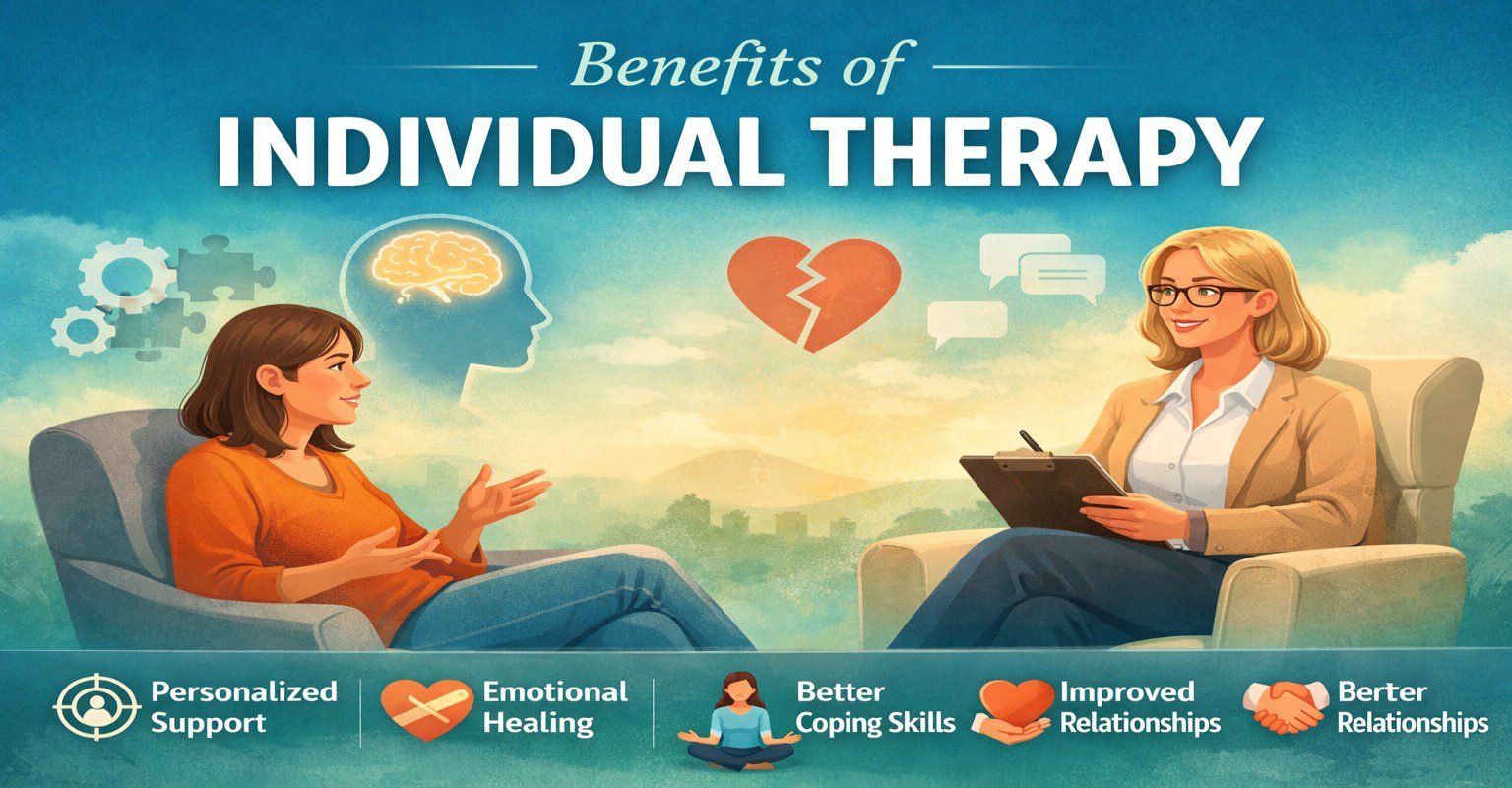
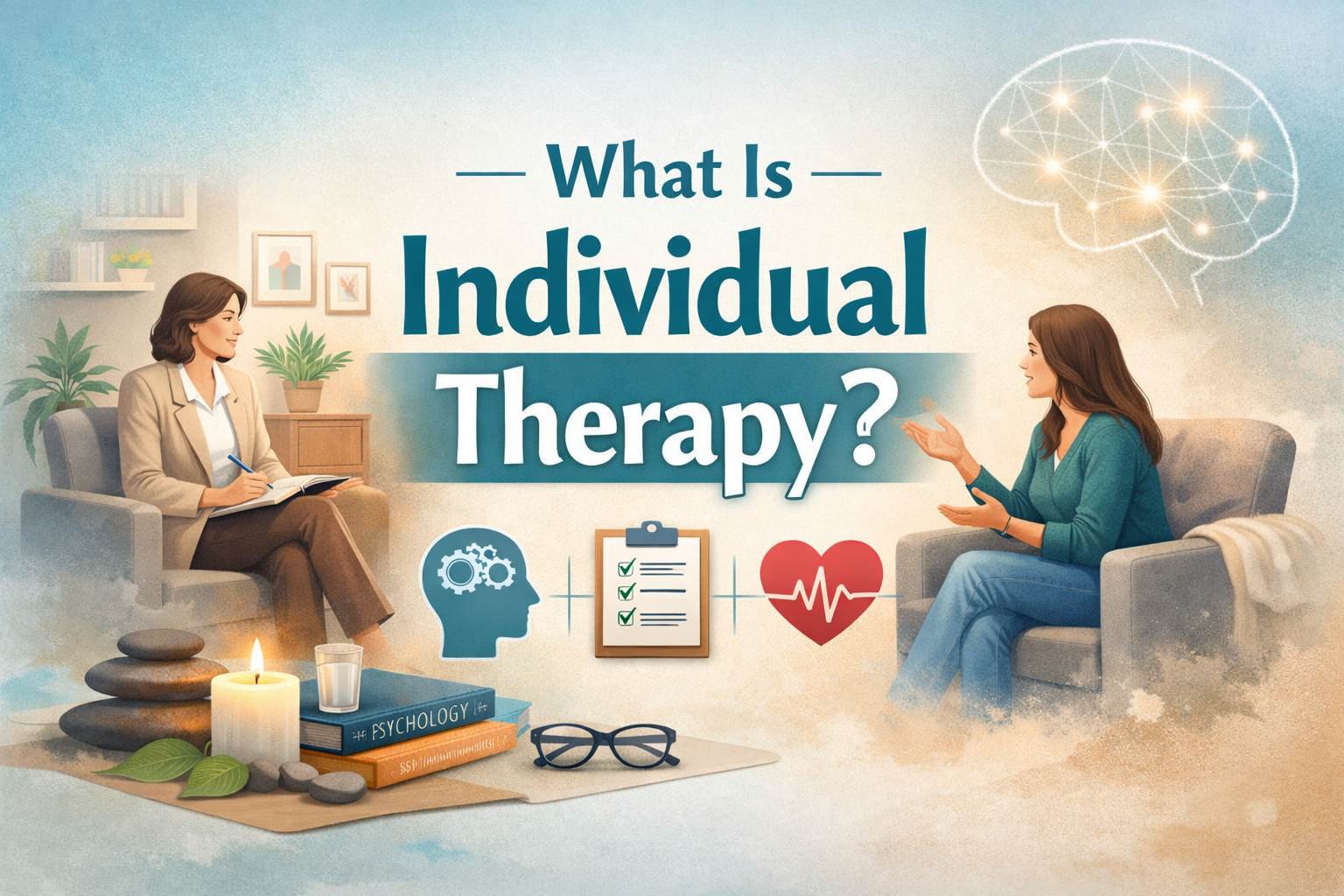
Individual therapy is a one on one mental health treatment where you meet privately with a licensed therapist to discuss your thoughts, emotions, and challenges. The therapist focuses on your specific needs, helps you understand patterns in your thinking and behavior, and teaches coping strategies that improve emotional well being. Individual therapy takes place in a confidential setting where you can speak openly about stress, anxiety, relationships, or personal struggles while working toward practical and meaningful change.
How Individual Therapy Works
Individual therapy works through structured conversations between you and a trained mental health professional. Sessions usually last between 45 and 60 minutes. You meet regularly and discuss experiences that affect your emotional and mental health. The therapist listens carefully, asks focused questions, and helps you understand how your thoughts and behaviors influence your reactions.
The process often begins with an assessment. The therapist learns about your concerns, background, and goals. Based on this information, they create a personalized approach. You then work together to identify patterns, develop coping strategies, and track progress over time. Therapy focuses on practical change, not just conversation.
As sessions continue, you apply what you learn in daily life. You practice new ways of responding to stress, improving communication, and managing emotions. Progress develops gradually as healthier patterns replace unhelpful habits.
Also Read: What Are The 4 Types Of Family Therapy?
Key Components of Individual Therapy
Confidentiality is a core component of individual therapy. You can share personal experiences without fear of judgment. This privacy allows honest discussion of sensitive topics such as trauma, relationships, and emotional struggles.
The one on one format provides personalized attention. The therapist focuses entirely on your needs and adjusts sessions based on your comfort level and progress. This individualized approach improves effectiveness.
Individual therapy also remains goal oriented. You and your therapist define areas for improvement. These goals guide sessions and help measure progress. Therapists use structured techniques to support meaningful change.
Also Read: What Does A Relationship Therapist Do?
What Happens During an Individual Therapy Session
The first session usually focuses on understanding your situation. The therapist asks about your concerns, stressors, and expectations. This helps create a treatment plan.
In ongoing sessions, you discuss situations from your daily life. You may talk about work stress, emotional reactions, or relationship challenges. The therapist helps you identify patterns and understand underlying causes.
You also learn coping skills. These may include managing negative thoughts, improving communication, setting boundaries, or regulating emotions. Sessions often end with reflection and direction for continued progress.
Also Read: How Much Does Couples Therapy Cost?
What Individual Therapy Helps With
Individual therapy helps with a wide range of emotional and mental health concerns. Many people seek therapy for anxiety, depression, and chronic stress. Others attend therapy to process trauma, grief, or major life transitions.
Therapy also helps with relationship conflicts, anger issues, low self confidence, and burnout. Some individuals use therapy for personal growth and improved self awareness. The therapist helps you understand reactions and develop healthier responses.
Benefits of Individual Therapy
Individual therapy improves emotional awareness. You learn to recognize thoughts and feelings that influence behavior. This helps you respond calmly rather than react impulsively.
Therapy builds coping skills. You learn strategies to manage stress, anxiety, and difficult emotions. These tools improve resilience and emotional stability.
Therapy also helps identify negative patterns. You recognize habits such as avoidance, overthinking, or self criticism. Replacing them with healthier responses improves relationships and decision making.
Over time, therapy improves confidence, communication, and overall quality of life.
Types of Individual Therapy Approaches
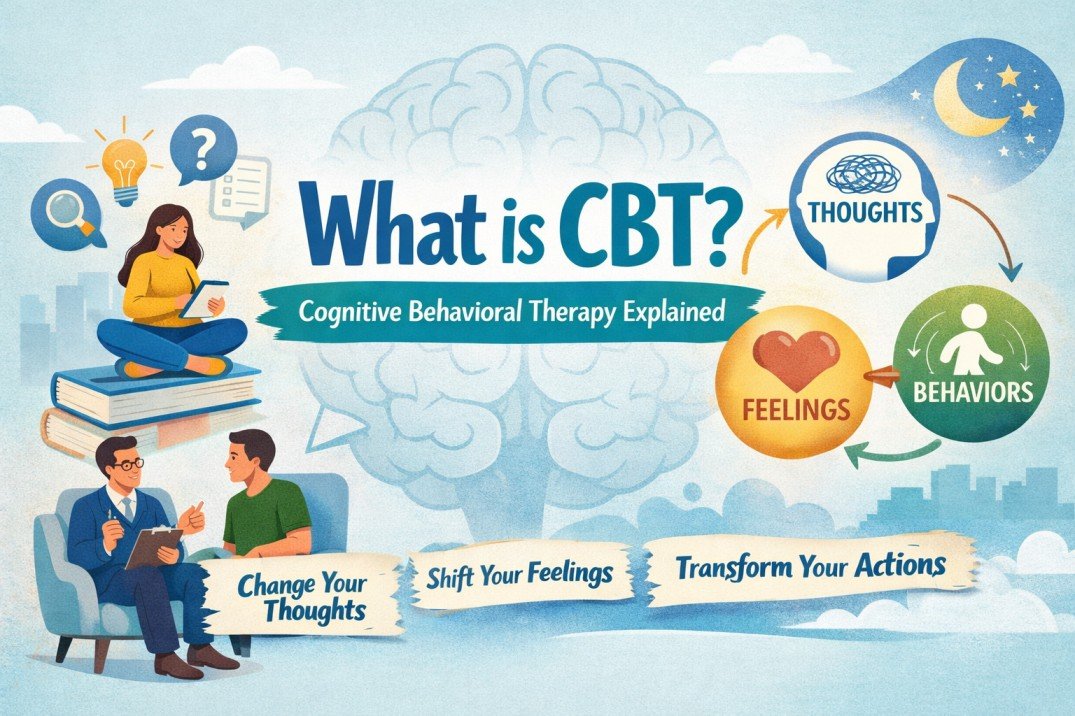
Therapists use different approaches depending on your needs. Cognitive behavioral therapy focuses on changing unhelpful thoughts and behaviors. This approach is commonly used for anxiety and depression.
Psychodynamic therapy explores deeper emotional patterns shaped by past experiences. This helps address long standing difficulties.
Humanistic therapy focuses on personal growth and self awareness. Mindfulness based therapy improves emotional regulation. Solution focused therapy emphasizes practical steps toward goals. Therapists often combine approaches for personalized care.
Short Term vs Long Term Individual Therapy
Short term therapy focuses on specific concerns such as stress, decision making, or life transitions. This type usually lasts a few sessions or months.
Long term therapy addresses deeper emotional patterns such as trauma or chronic anxiety. It allows more time for insight and lasting change.
The duration depends on your goals, concerns, and progress. Sessions may begin weekly and change over time.
Who Should Consider Individual Therapy
You should consider individual therapy if you feel overwhelmed, anxious, or emotionally stuck. Therapy helps during major life changes such as relationship problems, job stress, or grief.
It also benefits people struggling with anger, low motivation, or communication difficulties. Some individuals attend therapy for personal growth and improved self understanding. You do not need to wait for a crisis.
When to Start Individual Therapy
You can start individual therapy whenever emotional challenges begin affecting your daily life. Early support often prevents problems from becoming more severe.
Therapy also helps during transitions such as career changes, parenting, or relationship shifts. Many people begin therapy to gain clarity and improve coping skills.
Is Individual Therapy Effective
Research shows individual therapy improves mental health outcomes. Evidence based approaches reduce symptoms of anxiety and depression. Therapy also improves emotional regulation and coping ability.
Effectiveness depends on consistency and engagement. Most people experience gradual improvement. Therapy helps build resilience and improve daily functioning.
Individual Therapy vs Group Therapy
Individual therapy focuses entirely on your experiences. The therapist tailors sessions to your needs and maintains privacy. This allows deeper exploration.
Group therapy involves multiple participants discussing shared challenges. It provides peer support but less personalized attention.
Individual therapy suits people who prefer private and focused support.
How to Prepare for Your First Therapy Session
Think about what brought you to therapy. You can mention stress, emotions, or specific challenges. You do not need detailed preparation.
Be open during the session. The therapist guides the conversation and helps clarify your thoughts. You can also ask questions about the therapy process.
FAQs
The duration varies depending on your goals and concerns. Some people attend briefly while others continue longer.
Yes. Therapists follow strict confidentiality guidelines. Your information remains private.
Most people start with weekly sessions. Frequency may change based on progress.
You can discuss anything affecting your emotional well being including stress, relationships, or personal goals.
Yes. Therapy helps identify triggers, change thought patterns, and develop coping strategies.
Conclusion
Individual therapy provides a confidential and structured space where you can understand your thoughts, manage emotions, and develop healthier coping strategies. It helps you address anxiety, stress, relationship challenges, and personal growth goals while improving overall quality of life. With consistent sessions, you gain insight, build resilience, and create lasting behavioral change. Lumen Health & Psychological Services Inc offers individual therapy focused on personalized care, practical strategies, and meaningful progress toward better mental and emotional well-being.