
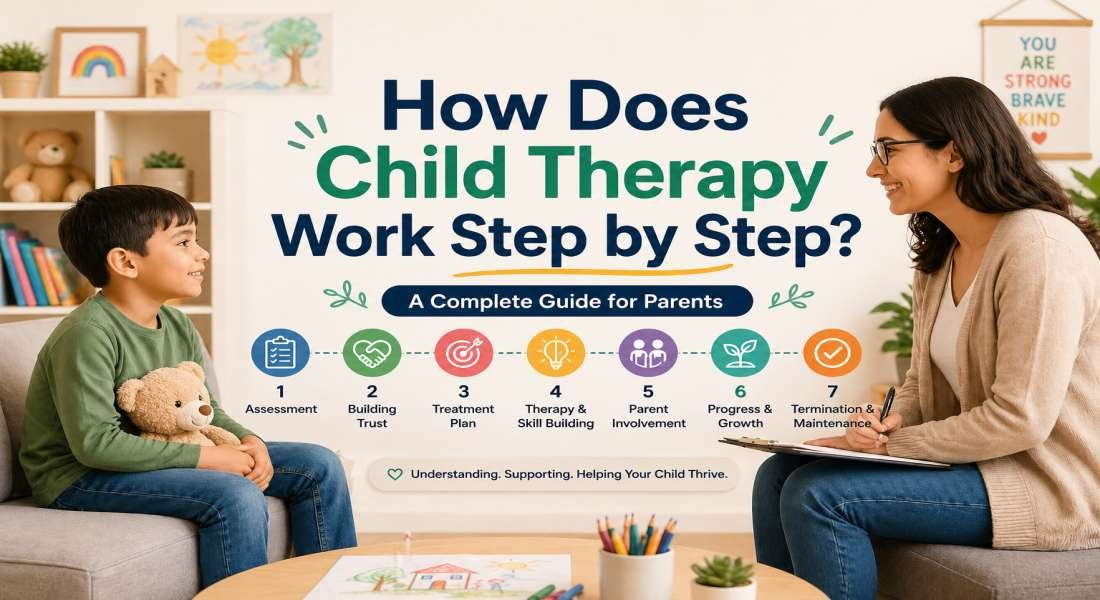
Child therapy works through a structured process that begins with assessment, builds trust with your child, uses targeted techniques to teach emotional and behavioral skills, involves you as a parent, and ends when your child can manage challenges independently. In child therapy, each step focuses on understanding your child’s inner experience, not just correcting behavior.
Before Therapy Starts: What You Should Know
You usually consider therapy when your child shows ongoing emotional or behavioral changes such as anxiety, anger, withdrawal, or difficulty at school. These patterns signal that your child needs structured support, not discipline alone.
Before the first session, the therapist gathers detailed information about your child’s development, family environment, school life, and recent changes. This context matters because children’s behavior reflects what they experience, not just what they choose.
Prepare your child in a simple and neutral way. Tell them they are meeting someone who helps children talk about feelings and solve problems. Avoid framing therapy as something they need to fix.
Also Read: What are the 4 Types of Family Therapy?
Step 1: Initial Intake and Assessment
The process starts with one to three sessions focused on understanding your child fully. The therapist meets you to gather history, clarify concerns, and identify patterns. They then observe your child through conversation or play.
This stage looks at emotional triggers, behavior cycles, and developmental factors. For example, frequent anger may reflect difficulty managing frustration, not intentional misbehavior.
A careful assessment leads to accurate treatment. Without it, therapy risks addressing symptoms instead of causes.
Also Read: How Much Does Couples Therapy Cost?
Step 2: Building Trust and Emotional Safety
Your child will not open up immediately. Trust develops through repeated, safe interactions.
The therapist creates a space where your child feels accepted without judgment. Younger children engage through play because play is their natural way of communicating. Older children may talk, draw, or participate in structured activities.
This step determines the effectiveness of everything that follows. When your child feels safe, they begin to express thoughts and emotions more honestly.
Also Read: What is couples counseling?
Step 3: Creating a Personalized Treatment Plan
After assessment, the therapist defines clear, specific goals based on your child’s needs. These goals are measurable and practical.
Instead of a general goal like improving behavior, the plan may focus on reducing anxiety, improving emotional expression, or managing anger without outbursts.
The therapist selects methods that match your child’s age and concerns. A child with anxiety may learn to identify and challenge unhelpful thoughts. A younger child dealing with emotional stress may work through guided play activities.
You are part of this process. Your observations help shape realistic goals.
Also Read: What Is Child Therapy?
Step 4: Active Therapy Sessions
This is where your child actively learns and practices new skills. Each session follows a structure even if it looks informal.
Sessions usually begin with a brief check-in to understand your child’s current emotional state. The therapist then introduces an activity designed to build a specific skill. This may include drawing emotions, role-playing situations, storytelling, or guided exercises. The session ends with reflection, helping your child connect the activity to real-life situations.
Different techniques serve different purposes. Play-based methods allow younger children to express feelings without relying on words. Cognitive behavioral methods help older children recognize and change thought patterns. Behavioral strategies reinforce positive actions through repetition.
For example, a child with anxiety learns to identify worried thoughts and test whether they are realistic. A child with anger learns to pause, label emotions, and choose a response instead of reacting immediately.
Progress happens through repeated practice over time.
Step 5: Parent Involvement and Guidance
Your role is essential. Therapy does not work if it stays inside the session.
The therapist meets with you regularly to explain what your child is learning and how you can support that process at home. You learn practical strategies such as setting consistent limits, reinforcing positive behavior, and responding to emotional reactions in a structured way.
In some cases, the therapist guides you directly during interactions with your child. This helps you apply techniques correctly in real situations.
When your response at home aligns with therapy, progress becomes stable and long-lasting.
Step 6: Progress Tracking and Adjustments
The therapist monitors progress continuously. They observe changes in emotional responses, behavior patterns, and daily functioning.
If progress slows or new challenges appear, the therapist adjusts the approach. This may involve changing techniques, refining goals, or increasing your involvement.
You receive regular feedback so you understand what is improving and what still needs attention. This ensures therapy remains effective.
Step 7: Ending Therapy and Long-Term Support
Therapy ends when your child consistently uses the skills they have learned and no longer relies on sessions for stability.
The therapist prepares your child gradually by reducing session frequency. This allows your child to practice independence while still having support if needed.
Some children benefit from occasional follow-up sessions during new challenges. These sessions help maintain progress.
What Happens in a Typical Child Therapy Session?
Sessions usually last between 30 and 60 minutes and take place weekly or every two weeks. Consistency helps build trust and reinforces learning.
Each session adapts to your child’s current needs. Some focus on emotional expression, while others focus on practicing specific skills.
Your child may not describe each session in detail afterward. This is normal. Progress shows through behavior changes.
How Long Does Child Therapy Take?
There is no fixed timeline. Some children improve within a few months when concerns are mild or situational. More complex issues require longer support.
The duration depends on your child’s age, the severity of the issue, session consistency, and how effectively strategies are applied at home.
You should expect gradual improvement rather than immediate results.
Types of Child Therapy Used
Therapists use different methods based on your child’s needs. Play-based approaches help younger children express emotions. Cognitive behavioral methods help older children manage thoughts and reactions. Behavior-focused work targets specific actions. Family sessions address relationship patterns that affect the child. Group settings help children build social skills.
Effective therapy often combines multiple approaches.
Signs That Child Therapy Is Working
You will notice changes in how your child handles emotions and situations. They may express feelings more clearly, show fewer extreme reactions, and respond to challenges with more control.
Improvements often appear first at home and then extend to school and social environments. Progress is gradual and consistent.
Common Concerns Parents Have
You may worry that your child will not talk. Children communicate through behavior, play, and interaction even when they say little.
You may think therapy is only for serious problems. Early support prevents issues from becoming more difficult.
You may question your role. Your involvement directly affects how well therapy works.
When Should You Consider Child Therapy?
You should consider therapy when emotional or behavioral patterns continue and affect daily functioning. This includes persistent anxiety, frequent anger, withdrawal, school difficulties, or noticeable changes after stressful events.
Early support leads to better outcomes. Waiting often allows patterns to become stronger.
How to Choose the Right Child Therapist
Choose a licensed professional with experience working with children. Ask about their approach and how they involve parents. Observe how they communicate with both you and your child.
Your child needs to feel comfortable. Without that connection, progress slows regardless of qualifications.
FAQ’s
Look for ongoing emotional or behavioral changes that affect daily life. If these patterns persist and do not improve with support at home, therapy is appropriate.
Children can begin as early as age three. The therapist adjusts methods based on developmental level.
The therapist gathers background information, understands your concerns, and may observe your child through interaction or play.
Some children improve within a few months. Others need longer support depending on the issue.
No. Children often express themselves through play, drawing, or activities.
Yes. Your involvement is essential for reinforcing progress outside sessions.
Resistance is common at first. Most children become comfortable once trust develops.
Therapy is private but not completely hidden from parents. Important progress and safety concerns are shared.
You will notice gradual improvements in emotional expression, behavior, and confidence.
Therapy ends when your child consistently applies coping skills and manages challenges independently.
Final Thoughts
Child therapy follows a clear, structured process built on understanding, trust, skill-building, and consistent support. It works because it addresses the reasons behind behavior and teaches your child how to manage emotions effectively.
When you understand how each step works, you can support the process with clarity and confidence, and that directly improves your child’s outcome.If you are considering professional support, Lumen Health & Psychological Services Inc provides structured, evidence-based child therapy that focuses on long-term emotional growth and practical, lasting change