
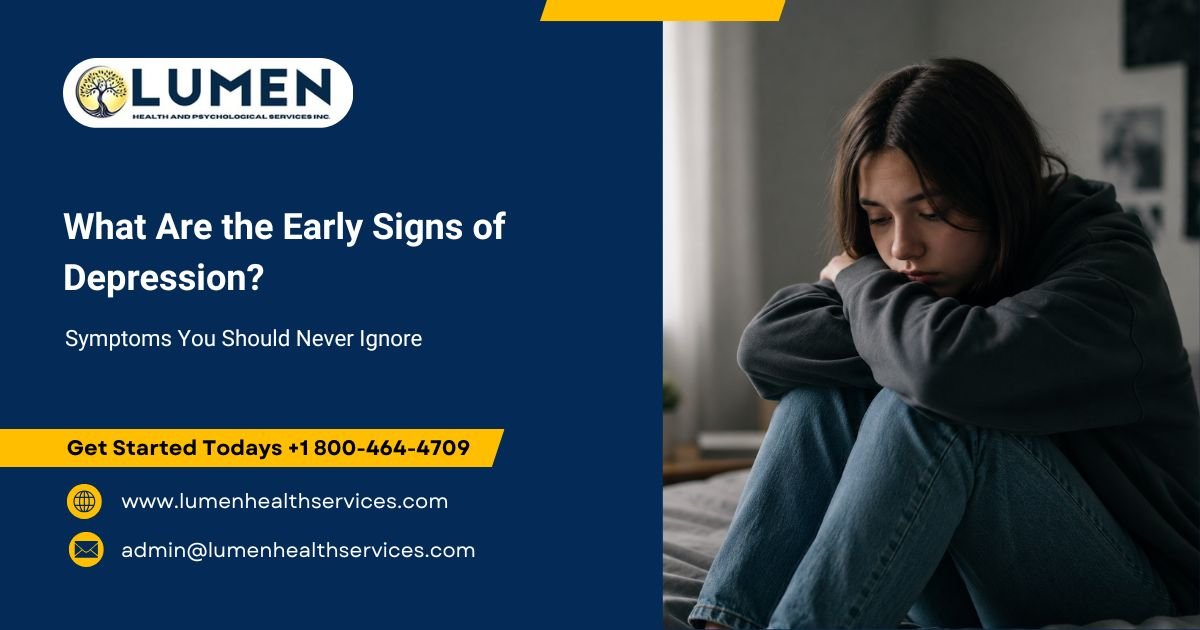
Depression is more than feeling sad for a few days. It is a mental health condition that affects how you think, feel, and function in daily life. The early signs of depression often develop gradually and may include persistent sadness, loss of interest in activities, changes in sleep or appetite, low energy, difficulty concentrating, and feelings of hopelessness. Recognizing these symptoms early can help you seek appropriate support before they become more severe.
Many people dismiss the first signs of depression as stress or temporary emotional exhaustion. However, when symptoms last for two weeks or longer or begin interfering with work, school, relationships, or daily responsibilities, it is important to seek a professional mental health evaluation.
What Are the Early Signs of Depression?
Early symptoms of depression can impact your emotions, thoughts, body and behavior. The symptoms of depression vary from person to person, but there are some common symptoms among many people who suffer from depression.
Emotional Signs of Depression
One of the first changes people notice is a persistent low mood that does not improve with time. You may feel empty, hopeless, or emotionally numb even when positive things happen around you. Many people also lose interest in hobbies, social activities, or spending time with family and friends.
Irritability, frustration, excessive guilt, and feeling worthless are also common emotional symptoms. Some people cry more often, while others struggle to express emotions at all.
Physical Symptoms of Depression
Depression is not only a mental disease, it is also a physical one. Feeling tired all the time, despite adequate rest. Sleep patterns tend to be disrupted, which may result in insomnia or sleeping for much longer than normal.
There may be changes in appetite and weight, which can cause weight gain or loss. Some people develop headaches, tenseness of muscles, stomach pain or mysterious aches in their bodies for which no diagnosis can be found.
Behavioral Changes
The depressed person may isolate himself from social interaction and withdraw from duties that were once readily performed. Simple activities, like working or attending school or keeping personal hygiene, can feel overwhelming.
Other symptoms of depression that might indicate cognitive symptoms include problems with concentration, decision-making, and remembering.
Also Read: Psychologist for Anxiety and Depression in Citrus Heights, CA
What Are the Five Most Common Signs of Depression?
Although symptoms vary from person to person, five of the most common signs include:
1. Persistent Sadness or Low Mood Most Days
It is normal to feel sad after a difficult event, however, depression is a low mood that persists for the majority of the day, for at least two weeks or more. You might feel hopeless, empty, and emotionally numb without a reason. For instance, a person who typically relishes spending time with family members may feel overwhelmed or unable to feel happy despite positive happenings in his life.
2. Loss of Interest or Pleasure in Activities Once Enjoyed
A common sign of depression is losing interest in hobbies, social activities, or routines that once brought enjoyment. A change in mood and enthusiasm for activities may occur, such as a person who used to enjoy going to the gym, gardening or hanging out with friends no longer feels like fun. This loss of interest can also impact on relationships and a decreased desire to be involved in daily life.
3. Fatigue or Lack of Energy Despite Adequate Rest
Depression can lead to constant fatigue in the body and mind, which does not go away with sleep or rest. Simple commonplace activities can be challenging or labour-intensive. For instance, a person can sleep for eight or nine hours but still not feel refreshed enough to get out of bed, do household chores or focus at work because they are exhausted all the time.
4. Changes in Sleep or Appetite
Depression can significantly affect sleeping and eating habits. Some people may have trouble sleeping and not be able to fall asleep or stay asleep; others may sleep more than usual and still feel tired. Appetite may also improve or diminish, resulting in noticeable changes in weight. For instance, someone might not want to eat, thus losing weight unintentionally, and another might be eating more often to deal with emotional turmoil.
5. Difficulty Concentrating or Making Decisions
Depression can affect your thinking, memory, or even simple decisions. Things that were once routine can get frustrating and mentally draining. For instance, they might have trouble concentrating during work meetings, forget to make important appointments, or take a long time to choose their outfit or what groceries to purchase because they are affected by their concentration and confidence.
These symptoms can range from mild to severe. If several occur together for more than two weeks, it is important to seek professional support.
Also Read: Benefits of Depression Therapy
How Depression Symptoms Differ in Women and Men
Depression affects people of all genders, but symptoms do not always appear the same.
Signs of Depression in Women
Women are more likely to experience persistent sadness, excessive guilt, feelings of worthlessness, emotional sensitivity, changes in appetite and sleep disturbances. Some women experience symptoms of depression during pregnancy, postpartum, perimenopause and menopause due to hormonal shifts.
For women with anxiety and depression, symptoms can include excessive worrying, restlessness, irritability, and constant emotional fatigue, in addition to the symptoms of depression.
Male Depression Symptoms
Depression in men is sometimes less obvious because emotional distress may appear as anger, irritability, frustration, or risk-taking behaviors rather than sadness. Some men are socially isolated, work too hard, overindulge in alcohol or don’t talk about their feelings.
Understanding these differences is significant since men may have depression for longer without it being detected.
Can Children and Teenagers Experience Depression?
Yes. Depression affects children and teenagers as well as adults.
Childhood Depression Symptoms
Depressed children might seem unusually irritable, clingy, lose interest in playing, not do well in school or complain of frequent physical symptoms, such as stomachaches or headaches, without a medical cause.
Signs of Depression in Youth
While teens sometimes experience mood swings, sadness and loneliness, poor school performance, loss of interest, insomnia or irritability could be a sign of depression and not a normal part of growing up.
Early intervention is important in the treatment of young people with depression.
Also Read: Why Is My Teen Always Angry?
Depression or Anxiety: How Can You Tell the Difference?
It is difficult to tell the difference between depression and anxiety because they often go hand in hand.
The main symptoms of depression are feelings of sadness, hopelessness, loss of interest, and low levels of enjoyment. People who suffer from anxiety tend to worry too much, be afraid, have racing thoughts and constantly expect something negative to occur.
Many people have both illnesses. The symptoms may be a sign of depression, anxiety or another mental health condition; a mental health practitioner can tell and recommend treatment.
I Think I Have Depression. What Should I Do?
If you believe you are depressed, don’t diagnose yourself just by looking online. Educational resources can be useful, but a mental health professional will be able to make a more accurate assessment.
If your symptoms have persisted for 2 weeks or more, or if they are interfering with your daily activities or are worsening, think about having a checkup. Early help can mean better treatment outcomes and can mean that the symptoms don’t get worse.
If you have thoughts of hurting yourself or feel you are in immediate danger, get emergency medical attention or call emergency services right away.
How Is Depression Treated?
Psychotherapy is usually first-line treatment for mild to moderate depression. Cognitive Behavioral Therapy (CBT) is a strategy that aids in the identification of negative thinking patterns, training in healthy coping strategies, and the incremental modification of behaviors that are inducing depression.
If the depression is moderate to severe, medications might also be offered in conjunction with therapy. Antidepressants can address the brain chemistry that is out of balance, and psychotherapy can treat emotional and behavioral impediments that can lead to long-term recovery.
Healthy lifestyle habits, like physical exercise, proper sleep, healthy diet, stress control and supportive relationships, can also have a positive effect on mental health. This is best done in conjunction with professional treatment, never as a substitute for therapy.
Everyone’s recovery is unique. Some people feel better in a few weeks, others need a longer treatment. The steps forward are not always smooth and there may be a few steps backwards, but that doesn’t mean it’s not working.
When Should You Seek Professional Help?
You should consider speaking with a mental health professional if depression symptoms persist for more than two weeks, interfere with relationships or work, reduce your ability to care for yourself, or affect your overall quality of life.
Early treatment can reduce symptom severity, improve daily functioning, and help prevent depression from becoming more difficult to manage.
Conclusion
Recognizing the early signs of depression is an important first step toward improving your mental health. Depression is treatable and can happen to anyone, whatever their age, gender or background. Knowing what the emotional, physical and behavioral symptoms are, can help you obtain assistance before the situation becomes a serious factor in your life.
We offer dynamic, evidence-based therapy for depression to individuals, teens and families in Northern California, including communities in Citrus Heights, Sacramento, Roseville, Folsom, Rancho Cordova, Elk Grove, Rocklin, Davis, Woodland, and elsewhere in Northern California. Our highly skilled therapists use a specific, evidence-based therapy called cognitive behavioral therapy (CBT) and other effective therapies to develop personalized treatment plans that empower clients to learn healthier coping strategies and gain long-term emotional healing.
If you or someone you know is having depression symptoms, don’t wait for depression to get worse. Call Lumen Health & Psychological Services today for a confidential consultation to truly get help for your needs.
Connect with Lumen Health & Psychological Services to make your first move for mental wellness. Delivering in-person and secure telehealth therapy makes high-quality depression treatment more accessible and convenient across Northern California.
FAQ’s
Common early signs include persistent sadness, loss of interest in activities, fatigue, changes in sleep or appetite, and difficulty concentrating.
If symptoms last longer than two weeks and interfere with daily life, a professional mental health evaluation is recommended.
Yes. Evidence-based therapies such as Cognitive Behavioral Therapy (CBT) are effective for many people with depression and help develop healthier thought patterns and coping strategies.
Treatment length varies depending on symptom severity, personal goals, and individual progress. Some people improve within a few months, while others benefit from longer-term care.
Yes. Depression can affect children and adolescents, although symptoms may appear differently than in adults. Early assessment and treatment are important for healthy emotional development.