
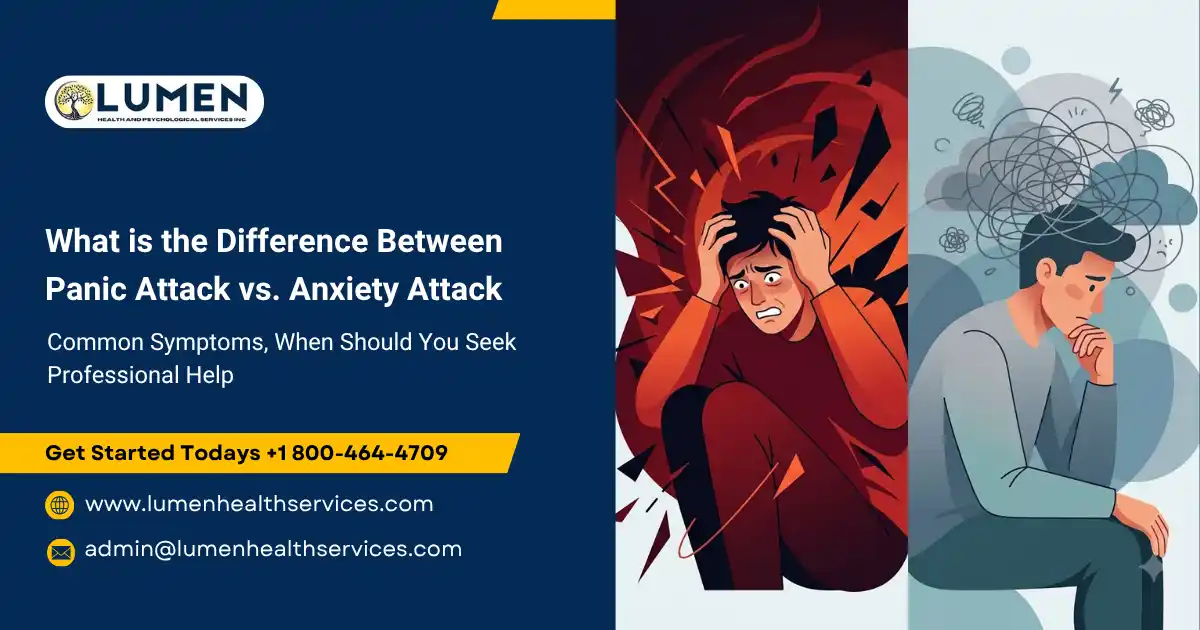
A panic attack is a sudden episode of intense fear that can cause a racing heart, shortness of breath, dizziness, sweating, and fear of losing control. The term “anxiety attack” is often used to describe severe anxiety; however, this is not a formal mental health diagnosis. While anxiety symptoms tend to build up over time, around continuing worry or stress, panic attacks tend to build up quickly and reach their peak within a few minutes.
Both experiences can feel overwhelming. Knowing the differences can help you to determine what you may be dealing with, and when you need professional assistance.
Key Difference Between a Panic Attack and an Anxiety Attack
The main difference involves how symptoms begin, how intense they feel, and how they relate to stress. However, symptoms can overlap, so you cannot reliably identify a condition based on one symptom alone.
| Feature | Panic attack | Anxiety symptoms, sometimes called an anxiety attack |
| Onset | Often sudden and intense | May build gradually around stress or worry |
| Intensity | Can involve overwhelming fear and physical symptoms | Can range from mild worry to severe distress |
| Common triggers | May occur with or without an obvious trigger | Often relate to anticipated problems or ongoing stress |
| Physical symptoms | Racing heart, dizziness, sweating, breathlessness | Muscle tension, fatigue, restlessness, stomach discomfort |
| Duration | Usually peaks within minutes, although effects can last longer | May persist while worry or stress continues |
| Clinical terminology | A recognized clinical phenomenon | Not a formal standalone diagnosis |
These patterns are general guides, not diagnostic rules. Anxiety can also begin suddenly, and a stressful situation can trigger a panic attack.
What Are the Common Symptoms of a Panic Attack?
Panic attacks activate the body’s fight-or-flight response, which prepares a person to respond to perceived danger. The physical reaction can feel frightening, even when there is no obvious threat.
Common panic attack symptoms include:
- A pounding or racing heartbeat
- Shortness of breath or a choking sensation
- Chest discomfort
- Sweating, trembling, or shaking
- Dizziness or feeling faint
- Nausea or stomach discomfort
- Chills, hot flashes, or tingling sensations
- Fear of dying, losing control, or something terrible happening
Symptoms often reach their peak within minutes. Some people experience a single panic attack, while others have repeated episodes.
A panic attack does not automatically mean you have panic disorder. A qualified healthcare professional can assess recurring attacks, ongoing fear of another episode, and changes in daily behavior.
What Are the Common Symptoms of Anxiety?
Anxiety is the body’s natural response to perceived uncertainty, pressure, or threat. While it is a normal part of life to experience anxiety at times, chronic or too much anxiety can have an impact on sleep, focus, relationships, and daily tasks. Symptoms of anxiety are feeling worried or concerned a lot of the time, feeling restless or on edge, feeling tense or on edge, getting headaches, not sleeping well or finding it difficult to sleep, not feeling calm, getting tired easily, and being irritated.
During times of stress, some may find a racing heartbeat, as well as difficulty breathing.
Symptoms of anxiety can last for a longer period of time, unlike a panic attack which usually hits at a maximum intensity within minutes, if a person is in a state of chronic or continuous stress. A mental health assessment may be helpful to understand what is causing people to be anxious and to find the best way to help them if this is becoming a problem or if it is affecting their daily life.
Also Read: How Anxiety Therapy Can Help Adults in Citrus Heights, CA
What Can Trigger Panic Attacks and Anxiety?
Panic attacks can occur unexpectedly or in response to specific situations. Anxiety often relates to anticipated challenges, uncertainty, or ongoing pressure.
Potential contributing factors include work stress, relationship difficulties, major life changes, traumatic experiences, phobias, and a personal or family history of anxiety disorders. Caffeine, certain substances, medication effects, and some medical conditions can also contribute to symptoms.
Not everyone has the same triggers. Tracking when symptoms occur, what happened beforehand, how long they lasted, and what helped them settle can provide useful information for a healthcare professional.
How Can You Calm a Panic Attack or Manage Anxiety?
When panic attack or anxiety symptoms begin, focus on practical steps that help you feel safer and manage distress. Start by breathing gently and gradually lengthening your exhale, but avoid forcing deep breaths if they make you feel dizzy. Ground your attention by noticing your feet against the floor and identifying objects, sounds, or other details around you.
If possible, move to a safe, quieter place and pause any activity that feels overwhelming. You can also keep track of possible triggers, sleep changes, caffeine intake, and recurring symptoms to discuss with a healthcare professional.
If panic episodes return or anxiety begins affecting your sleep, relationships, work, or daily activities, consider seeking a professional assessment. These strategies may help you cope with distress, but they do not replace professional care. Never assume that new, severe, or unexplained physical symptoms are caused by anxiety, as some may require urgent medical attention.
Can Therapy Help With Panic Attacks and Anxiety?
Yes. Psychotherapy can help people understand anxiety patterns, respond differently to frightening physical sensations, and develop more effective coping skills. Treatment depends on the person’s symptoms, history, preferences, and clinical needs.
Cognitive behavioral therapy (CBT) is an evidence-based approach for panic disorder and several anxiety disorders. It can help people identify unhelpful thought patterns, reduce avoidance, and gradually face feared sensations or situations through structured exercises when appropriate.
Therapy does not produce the same results or follow the same timeline for everyone. Some people notice improvements within several weeks, while others need longer-term support. A therapist can review progress and adjust the approach as needed.
At Lumen Health & Psychological Services, Individual Therapy offers a setting to discuss emotional challenges, stress, and personal concerns with a mental health professional. A therapist can help determine whether the service fits your needs and discuss appropriate next steps.
When Should You Seek Professional Help?
Consider speaking with a healthcare or mental health professional if panic episodes recur, anxiety feels difficult to manage, or symptoms lead you to avoid everyday activities. An assessment can help clarify possible causes and identify appropriate support.
Seek emergency medical care for new, severe, or unexplained chest pain, significant breathing difficulty, fainting, or other symptoms that could indicate a medical emergency. Panic attacks can resemble medical conditions, including heart problems, and you should not self-diagnose these symptoms.
Take the Next Step Toward Understanding Your Symptoms
Panic attacks and anxiety symptoms can overlap, but recognizing their common patterns can help you decide what to do next. Repeated or disruptive symptoms deserve professional attention, and new or severe physical symptoms may require urgent medical evaluation.
Lumen Health & Psychological Services provides individual therapy for people navigating emotional challenges and stress. If anxiety is affecting your daily life, consider discussing your concerns with a qualified mental health professional to explore appropriate support.
FAQ’s
Is a panic attack worse than an anxiety attack?
There is no formal clinical category for an “anxiety attack,” so the terms cannot be compared as two defined diagnoses. Panic attacks often involve a sudden surge of intense fear, while anxiety can vary in intensity and duration.
How long does a panic attack last?
Panic attack symptoms typically peak within minutes. The overall experience varies, and some people feel tired, unsettled, or anxious after the most intense symptoms subside.
Can anxiety cause a panic attack?
Yes. Anxiety and stressful situations can contribute to panic attacks, although some attacks occur without an obvious trigger. Experiencing a panic attack does not automatically mean you have panic disorder.
Can you have a panic attack without feeling anxious first?
Yes. Panic attacks can occur unexpectedly, without a clear warning or identifiable trigger. A healthcare professional can help assess repeated episodes and rule out other possible causes.
How do you know if you need therapy for anxiety?
Consider therapy if worry is difficult to control, symptoms keep returning, or anxiety affects sleep, concentration, relationships, or everyday responsibilities. You do not need to wait until symptoms become severe to seek support.
Can therapy stop panic attacks permanently?
Therapy can reduce panic symptoms and help people respond more effectively to them, but no treatment can guarantee that panic attacks will never return. Outcomes depend on individual circumstances, treatment needs, and continued practice of learned skills.
Also Read: