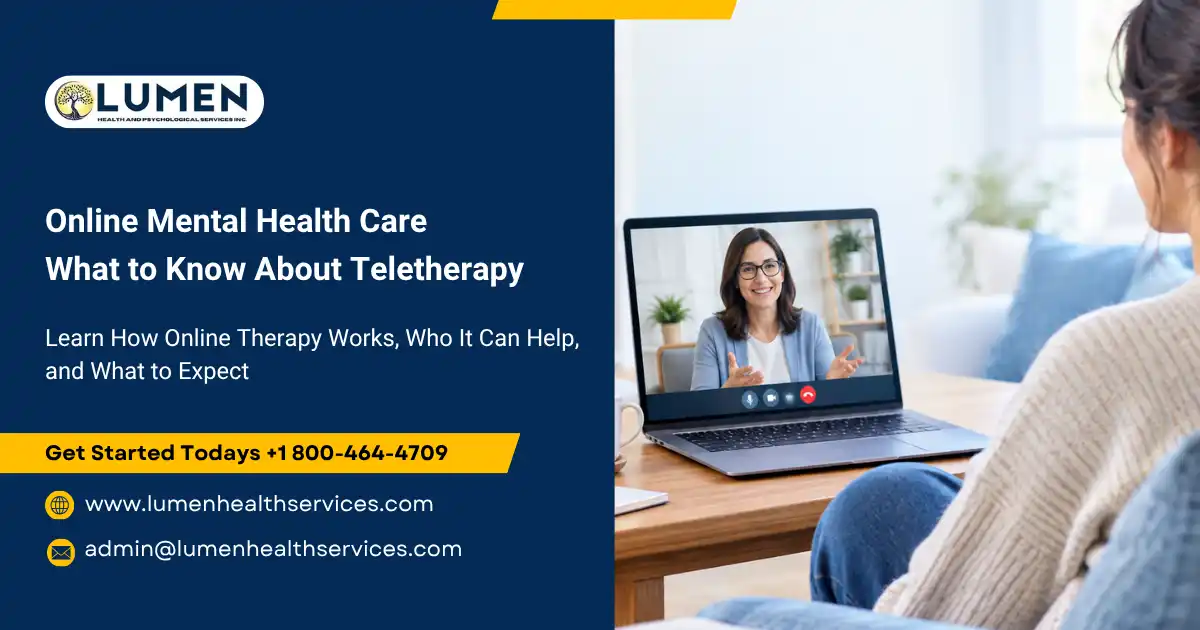
Online mental health care provides an opportunity to connect with a licensed mental health practitioner via a secure video or other telehealth means without traveling to the office. Because of its convenience, teletherapy can be used to treat anxiety, depression, stress, relationship problems, and other mental health concerns. According to NIMH, virtual mental health care can encompass assessing a person’s mental health and wellness, making a medical diagnosis, preparing therapy and care plans, one-on-one or household therapy, medical administration care, and follow-up care.
What Is Online Therapy?
Online therapy is another term for mental health treatment that uses telecommunications technology, also known as teletherapy, telepsychology, or virtual therapy. Depending on the provider and treatment plan, sessions may take place through secure video or other remote communication methods.
Its intent is much the same as face-to-face treatment. You see a trained mental health provider and share your worries, goals for treatment, coping skills and strategies for change that will keep you mentally healthy.
Tele-therapy can also alleviate practical barriers. You don’t have to take time to drive to an office, make arrangements for transportation, or leave extra time to travel to appointments.
How Does Teletherapy Work?
Most online therapy begins with an initial appointment or consultation. Your therapist may ask about your current concerns, mental health history, relationships, stressors, and treatment goals.
Your therapist then uses this information to determine an appropriate treatment approach. In subsequent sessions the topics could include learning about thoughts and feelings, coping strategies, changing unhelpful thinking patterns, communication, or working through difficult experiences.
It takes a strong internet connection, the right kind of device and somewhere where you can speak confidently.
Before beginning treatment it is important to take the provider’s experience into consideration, their treatment methods, insurance coverage, security procedures, and the benefits and limitations of telehealth, according to NIMH.
Is Online Therapy Effective?
Online therapy can be effective for many people, however, the best therapy format for the individual depends on their symptomology, outcomes, safety, and clinical requirements.
There is research evidence of the effectiveness of remote psychotherapy in a range of common mental health issues. The systematic review of videoconferencing psychotherapy demonstrated robust evidence for its efficacy in the treatment of anxiety and depression, and that in some cases results may be comparable to face-to-face treatment.
Another meta-analysis of randomized controlled trials (RCTs) also concluded that video-based teletherapy was equally effective as face-to-face psychotherapy for the treatment of depression symptoms.
This doesn’t imply online therapy is identical for anyone. Your individual situation should be taken into consideration before a qualified therapist recommends your use of teletherapy as your main treatment modality.
What Mental Health Concerns Can Online Therapy Help With?
Online Therapy for Anxiety
Online therapy can help people understand patterns of excessive worry, anxiety, avoidance, and stress. Evidence-based approaches such as cognitive behavioral therapy may help clients identify unhelpful thinking patterns and develop practical coping skills.
Online Therapy for Depression
Online therapy can address symptoms such as persistent sadness, low motivation, negative thinking, social withdrawal, and difficulty managing everyday responsibilities. Treatment may include cognitive behavioral strategies, behavioral activation, coping skills, and other approaches based on individual needs.
Research has found promising evidence for internet-delivered psychological treatments for depression and anxiety, although outcomes vary by treatment format, population, and level of clinical support.
Online Therapy for Work Stress and Burnout
Can online therapy help with work stress and burnout?
Yes, therapy may help people understand and manage the emotional and behavioral effects of ongoing work stress. Sessions may address boundaries, anxiety, emotional regulation, negative thought patterns, coping skills, communication, and changes that can support healthier daily routines.
Therapy does not remove workplace problems by itself. Instead, it can help you develop healthier ways to respond to stress and identify changes that may protect your mental health.
Can Couples and Families Do Therapy Online?
Yes. Couples can participate in online couples therapy when both partners can access a private and reliable connection.
Online marriage counseling may help couples address communication problems, recurring conflict, emotional distance, trust concerns, life transitions, and other relationship challenges.
Lumen Health Services provides online couples therapy and marriage counseling focused on communication, conflict resolution, emotional connection, and relationship concerns.
Online family therapy can also allow family members to participate from home. This can make scheduling easier when parents, children, or other family members have different schedules.
Is Online Therapy Appropriate for Teens?
Online therapy can be an option for adolescents when the format fits their developmental needs and clinical situation.
Teen therapy may address anxiety, school stress, emotional changes, social challenges, mood concerns, and difficult life transitions. Parents may also participate when clinically appropriate.
Lumen’s teen therapy services provide online and in-person counseling for adolescents and focus on concerns including anxiety, stress, emotional challenges, and life transitions.
For younger children, the appropriate format and level of family involvement should be determined by the treating clinician based on the child’s needs.
How Do You Choose the Best Telehealth Therapy Provider?
Instead of choosing an online therapy provider only because it has a high rating or low price, consider several clinical factors.
First, verify that the therapist has the appropriate professional license and experience for your needs. In California, the Board of Behavioral Sciences states that clinicians providing applicable behavioral health services to clients located in California generally need an active California license.
Next, ask what therapy approaches the clinician uses and whether those approaches fit your concerns. You should also understand how the provider protects privacy, what technology the sessions use, how appointments are handled, and what happens if you experience a technical problem.
A good therapist should also explain the potential benefits and limitations of teletherapy and help determine whether remote care is appropriate for you.
What Are the Benefits and Limitations of Online Therapy?
Online therapy can help improve the accessibility of mental health care. Some of the advantages may be reduced travel, work time flexibility, continuity of care, and the opportunity to participate in a familiar setting.
But teletherapy also comes with some drawbacks. Internet connection may cause interruptions in sessions. It’s not always possible to have sufficient privacy in your home environment. There may be clinical scenarios where a face-to-face or more intensive level of care is needed.
The use of online therapy should thus be considered one mode of providing professional mental health care, rather than all mental health care.
When Should You Consider In-Person or Urgent Care?
Online therapy may not be suitable if a person needs immediate emergency services, intensive monitoring or an in-person assessment that can’t be provided safely via telehealth.
If you are having a mental health crisis – or think you might hurt yourself or others, contact the emergency services immediately, not just at a scheduled therapy session.
If it is not an emergency, a trained mental health expert can assist in identifying the ideal first step, which may be online or in-person therapy.
Online Therapy in California
California residents considering teletherapy should check the provider’s license, treatment experience, privacy practices, and telehealth policies.
California’s Board of Behavioral Sciences specifically identifies informed consent, discussion of telehealth risks and limitations, provider credentials, and access to relevant emergency resources as important considerations for telehealth practice.
Lumen Health Services provides secure online therapy throughout California, along with in-person therapy in Citrus Heights. Its services include individual therapy, couples therapy, family therapy, and teen therapy.
If you are considering online mental health care, Lumen can help you determine which type of therapy may fit your needs.
Conclusion
Online mental health care can make professional therapy more accessible while maintaining a structured treatment relationship with a qualified clinician. The most important step is finding care that fits your mental health needs, goals, safety, and circumstances.
If you are considering therapy for anxiety, depression, work stress, relationship concerns, family challenges, or teen mental health, Lumen Health Services offers online therapy throughout California.
FAQ’s
Online therapy is mental health treatment provided remotely through telehealth technology, commonly using secure video sessions with a licensed mental health professional.
Research suggests that remote psychotherapy can produce outcomes comparable to in-person therapy for some concerns, including depression and anxiety. Suitability depends on the individual and treatment situation.
Yes. Online therapy can help address anxiety symptoms through evidence-based approaches such as cognitive behavioral therapy and practical coping strategies.
Yes. Online therapy can be used to treat depression, depending on symptom severity and the person’s clinical needs. Research supports several forms of remotely delivered psychotherapy for depression.
Therapy can help people understand work-related stress, develop coping strategies, improve boundaries, and address anxiety or emotional difficulties associated with prolonged stress.
Online couples and marriage counseling can help partners work on communication, conflict, emotional connection, trust, and relationship patterns when teletherapy is clinically appropriate.
It can be appropriate for some adolescents. The therapist should consider the teen’s age, concerns, safety, privacy, developmental needs, and level of family involvement.
Teletherapy should use appropriate privacy and security measures. Clients should also choose a private location and take steps to prevent others from overhearing their sessions.
There is no universal timeline. Some people seek short-term support for a specific concern, while others benefit from longer-term therapy. Treatment length depends on goals, symptoms, progress, and the treatment approach.
Read More:
What Is the Difference Between a Counselor and a Therapist?
Best In-Person Mental Health Care in Citrus Heights, CA
How Family Therapy Can Help When Communication Breaks Down
Individual Therapy for Adults in Northern California