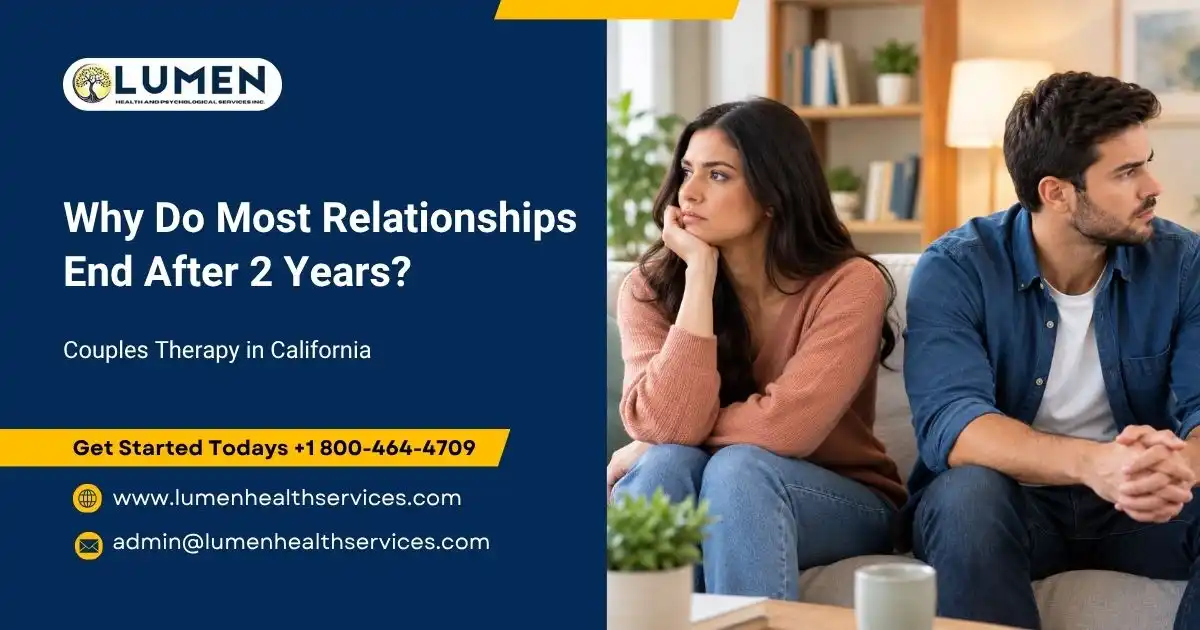
Most relationships do not end because they reach a two-year mark. There is no fixed two-year expiration point for relationships. However, many couples notice important changes around this stage because the early excitement may settle, routines become established, differences become more visible, and conversations about long-term compatibility become more important.
These changes can create relationship problems after 2 years, especially when couples struggle with communication, trust, emotional intimacy, conflict, or different expectations about the future.
Understanding what changes during this stage can help couples decide whether they are experiencing a normal transition or facing problems that need attention.
Also Read: How Relationship Therapy Helps Couples
Why Do Relationships End After 2 Years?
Relationships can end after two years for many different reasons. The most common problems involve unresolved conflict, emotional distance, changing expectations, loss of trust, differences in long-term goals, and difficulty maintaining emotional or physical intimacy.
The two-year point itself does not cause a breakup. Instead, it can be a period when couples begin to see whether their relationship can work beyond the early stage of dating.
1. The Honeymoon Phase Starts to Change
The early stage of a relationship often includes excitement, strong attraction, novelty, and a tendency to focus on a partner’s positive qualities.
Over time, this intensity usually becomes more familiar and stable. Partners may notice habits, personality differences, and areas of disagreement that were less obvious before.
The end of the honeymoon phase does not mean that love has disappeared. A healthy relationship can develop deeper trust and emotional intimacy as the initial excitement changes.
2. Differences Become More Difficult to Ignore
After spending more time together, couples may face differences involving finances, family, careers, lifestyle, communication, personal boundaries, or future plans.
Small differences may not matter early in a relationship. They can become more important when partners begin discussing marriage, children, living arrangements, finances, or other long-term decisions.
Compatibility does not require two people to agree on everything. It requires the ability to discuss important differences and reach workable decisions together.
3. Unresolved Conflict Becomes a Pattern
One reason why relationships fail after 2 years is that unresolved disagreements can turn into recurring conflict.
A couple may argue about the same issue repeatedly without addressing the underlying concern. Over time, partners can become frustrated, defensive, or emotionally withdrawn.
Research has found meaningful connections between communication patterns and relationship satisfaction, although communication is only one part of relationship health.
Healthy conflict does not mean avoiding disagreements. It means being able to discuss difficult subjects, repair problems, and move forward without repeatedly reopening the same conflict.
4. Emotional Intimacy Can Decline
Emotional intimacy involves feeling understood, respected, supported, and emotionally connected to your partner.
Some couples remain together physically while becoming increasingly disconnected emotionally. They may stop discussing their feelings, avoid vulnerable conversations, or feel that their partner no longer understands them.
Feeling understood can play an important role in how couples respond to relationship conflict. When emotional connection weakens, even ordinary disagreements can feel more serious.
5. Expectations About Commitment Change
Early dating often focuses on the present. After a couple has been together for several years, questions about the future may become more important.
Partners may have different expectations about marriage, children, finances, career decisions, where they want to live, or how they want to build their life together.
These differences do not always lead to separation. Honest conversations and professional relationship counseling can help couples understand whether they can create shared expectations.
6. Routine Can Replace Intentional Connection
Another common relationship problem after 2 years is becoming overly focused on routine.
Work, household responsibilities, financial pressure, family obligations, and technology can reduce the amount of meaningful time couples spend together.
Comfort is healthy in a relationship. However, couples still need opportunities for affection, conversation, shared activities, and emotional connection.
7. Intimacy May Change
Physical and emotional intimacy can change as a relationship develops.
Stress, health concerns, relationship conflict, changing schedules, and emotional distance can affect physical affection and sexual connection.
A change in intimacy does not automatically mean that a relationship is failing. The important question is whether both partners can discuss the change openly and address concerns without blame or pressure.
8. Personal Growth Can Change Compatibility
People continue to change throughout their lives. Career goals, personal values, boundaries, priorities, and expectations can develop significantly over several years.
Sometimes couples grow together. In other situations, their goals become increasingly different.
A strong relationship allows room for individual growth while maintaining shared values and mutual respect.
What Happens to a Relationship After 2 Years?
What happens to a relationship after 2 years varies from couple to couple. Many relationships move from the novelty and excitement of early dating toward greater familiarity, emotional attachment, realistic expectations, and long-term decision-making.
This transition can actually strengthen a relationship.
Partners may know each other better, communicate more openly, understand each other’s needs, and develop stronger trust.
Problems can arise when couples expect the early intensity of dating to remain unchanged or when they never develop healthier ways to handle conflict and differences.
Is It Normal for Relationships to Change After 2 Years?
Yes. It is normal for relationships to change after two years.
A relationship may become calmer and more predictable as partners become comfortable with each other. The initial excitement may decrease while trust, emotional security, and familiarity increase.
Healthy change can include deeper communication, greater trust, shared responsibilities, and realistic expectations.
More concerning changes include persistent emotional withdrawal, repeated unresolved conflict, dishonesty, contempt, ongoing distrust, or major disagreements about fundamental life goals.
The difference matters. A relationship changing does not necessarily mean that it is ending.
How Do You Know If Your Relationship Is Failing?
Certain patterns deserve attention, especially when they continue for an extended period.
Common warning signs include:
- The same arguments happen repeatedly without resolution.
- One or both partners feel emotionally disconnected.
- Trust has been seriously damaged.
- Partners avoid important conversations.
- Resentment continues to grow.
- Affection and emotional connection have significantly decreased.
- One partner consistently feels unheard or misunderstood.
- Major future goals no longer align.
- Attempts to resolve problems repeatedly fail.
These signs do not automatically mean a couple should separate. They can indicate that the relationship needs more intentional work or professional support.
Can Couples Therapy Help After 2 Years?
Yes. Couples therapy can help partners address communication problems, recurring conflict, emotional distance, trust concerns, and other relationship difficulties.
Couples therapy does not guarantee that a relationship will continue. Instead, it gives partners a structured setting to understand relationship patterns, communicate more effectively, and make informed decisions about their future.
Evidence-based approaches used in couples therapy can include Emotionally Focused Therapy, the Gottman Method, and cognitive behavioral approaches.
A therapist may help couples identify recurring interaction patterns, understand emotional needs, improve communication, practice conflict-resolution skills, and rebuild connection where appropriate.
Also Read: Types of Couples Therapy Explained
How Long Does Couples Therapy Take?
There is no single number of sessions that works for every couple.
The length of couples therapy depends on the nature of the concerns, how long problems have existed, the goals of treatment, participation from both partners, and progress during therapy.
Some couples seek short-term support for a specific problem. Others benefit from longer treatment when they are dealing with longstanding conflict, trust problems, or significant relationship distress.
When Should Couples Consider Counseling?
Couples counseling can be useful when partners repeatedly experience the same conflict, struggle to communicate, feel emotionally distant, or have difficulty rebuilding trust.
You do not need to wait until a relationship reaches a crisis before seeking help.
Early support may give couples an opportunity to address problems before resentment and emotional distance become more difficult to change.
For couples looking for relationship counseling near me or couples counseling near me, choosing a licensed mental health professional with appropriate couples-therapy training is an important first step.
Also Read: What Does a Relationship Therapist Do?
How Can Couples Strengthen Their Relationship After 2 Years?
Couples can take several practical steps to maintain connection as their relationship changes.
First, schedule regular conversations about the relationship instead of discussing problems only during arguments. Talk about emotional needs, expectations, finances, responsibilities, intimacy, and future goals.
Second, focus on understanding before trying to win an argument. Listening does not require agreement. It allows each partner to understand what the other person is experiencing.
Third, address recurring conflict rather than repeatedly treating individual arguments as separate problems.
Finally, seek professional support when communication has become difficult or when both partners feel stuck.
For couples in California, couples therapy can provide structured support when relationship challenges begin affecting emotional connection and daily life.
Couples Therapy in California
If relationship problems are becoming difficult to manage alone, couples therapy can provide a confidential setting to work through communication difficulties, emotional distance, conflict, trust concerns, and changing relationship expectations.
For people searching for relationship counseling Citrus Heights, relationship therapy in Citrus Heights, couples counseling Citrus Heights, or couples therapy in Citrus Heights, Lumen Health & Psychological Services provides relationship-focused mental health support.
Couples who live in the greater Sacramento area may also search for couples therapy in Sacramento or relationship counseling Sacramento when looking for professional support.
Final Thoughts
Relationships do not have a two-year expiration date. The two-year mark can simply represent a stage when couples begin moving beyond early romantic excitement and face more realistic questions about compatibility, communication, intimacy, commitment, and the future.
If your relationship has become more difficult, that does not automatically mean it is over. Understanding the underlying problem and addressing it early can make a meaningful difference.
Lumen Health & Psychological Services offers couples therapy and relationship counseling for partners who want professional support with communication, conflict, emotional connection, trust, and relationship concerns.
If recurring conflict or emotional distance is affecting your relationship, contact Lumen Health & Psychological Services to discuss couples counseling in California.
FAQ’s
There is no evidence that most relationships automatically end after two years. Some couples experience more challenges around this stage because early excitement settles and differences, expectations, conflict patterns, and long-term goals become more visible.
Couples may break up after two years because of unresolved conflict, emotional distance, trust problems, incompatible long-term goals, changing expectations, or difficulty maintaining connection.
Relationships can feel harder when the initial novelty decreases and everyday responsibilities, differences, and long-term decisions become more prominent. This does not necessarily indicate that the relationship is unhealthy.
Yes. Healthy relationships change over time. Early excitement may become greater emotional security, familiarity, trust, and commitment. Problems arise when partners cannot adapt to the changes or address ongoing conflict.
It can, but there is no fixed timeline. The honeymoon phase varies between couples and may last weeks, months, or years. A decrease in early excitement does not necessarily mean that love or commitment has disappeared.
Common problems include recurring arguments, communication difficulties, emotional distance, changing intimacy, trust concerns, resentment, different expectations, and disagreements about long-term goals.
Couples therapy can help partners address relationship patterns, improve communication, work through conflict, and rebuild connection. However, therapy cannot guarantee that a relationship will continue.
Couples should consider counseling when problems continue despite their efforts, communication repeatedly breaks down, trust has been damaged, or both partners feel stuck in unhealthy relationship patterns.
Also Read:
Best Marriage Counseling in Citrus Heights, CA for Couples
5 Stages of a Relationship and When to Seek Couples
10 Signs of a Dying Relationship and How Couples