
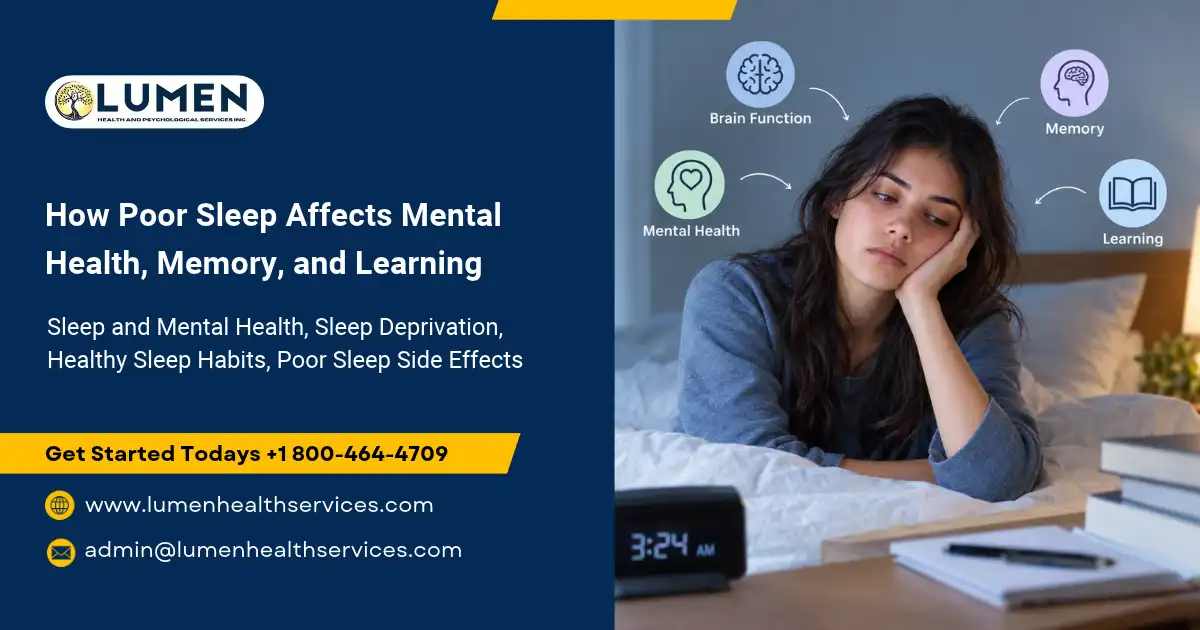
Poor sleep can affect mental health, memory, concentration, and learning by reducing attention, disrupting emotional regulation, and making it harder for the brain to process new information. Poor sleep or a lack of sleep can impact on schoolwork, work, relationships and everyday functioning over time.
Sleep helps the brain to organize, regulate emotions and respond to stress. Persistent insomnia can create a vicious circle that worsens the emotional difficulties and increases stress that lead to insomnia.
How Poor Sleep Affects Brain Function
Sleep carries out a number of processes that enable the brain to function. At night, the brain stores information, and consolidates some memories. During sleep, attention, reaction time and emotional regulation are also maintained.
Without adequate sleep you can experience difficulty in focusing, problem solving, impulse regulation and making sound decisions. These effects can happen after one bad night and increase when sleep is lost over a period of time.
The National Heart, Lung, and Blood Institute (NHLBI) reports that a lack of sleep can impact learning, problem-solving, decision making, and emotional health.
How Poor Sleep Affects Memory and Learning
1. Reduced Concentration and Learning Ability
Poor sleep quality can impair concentration and attentiveness, making it more difficult to learn new things. Pupils can find lessons hard to follow, reading difficult and exams demanding. Adults can struggle to follow instructions, to work on detailed tasks, or to attend meetings.
Increasing study time doesn’t always enhance learning when you are chronically fatigued. Good sleep prior to learning enables attention and processing the new information in the brain.
2. Impaired Memory Consolidation
Memory consolidation is the strengthening and organisation of newly learned information in the brain. One of the key factors in this is sleep.
Sleep promotes various forms of memory. Deep non-REM sleep helps with some aspects of memory consolidation, and REM sleep helps process memory and learn new things.
If you are not getting enough sleep or if you are not sleeping well, you might find it difficult to remember information or to remember it later. That’s why taking a good sleep after studying may be better than studying late every night.
3. Reduced Working Memory and Problem-Solving
Working memory means you are able to temporarily retain and apply information. It assists you to follow instructions, carry out calculations, compare ideas and make decisions.
Sleep disturbances may impact working memory and other executive functions. Brain fog or slowed reaction times, organizational challenges, or inability to follow a conversation.
Such impacts can make it more difficult to perform everyday tasks, even if you know what to do or what is being asked.
How Poor Sleep Affects Mental Health
1. Increased Irritability and Emotional Reactivity
Sleep deprivation can affect brain systems involved in emotional processing and self-control. Studies show that sleep loss can impact communication among regions linked to emotional response and control.
This can make you feel more irritable, anxious or sensitive to regular stress. The issues that arise may be more upsetting, and you might not be able to handle things downright when things aren’t going your way.
A restful sleep can help to better regulate your emotions and can help you handle daily stressors better when you sleep regularly.
2. Connection Between Sleep Problems, Anxiety, and Depression
Sleep problems and mental health conditions often influence each other. For some, anxiety can impact their thought patterns, making it hard to quiet racing thoughts at bedtime and depression can impact sleep patterns, motivation and energy during the day.
People who continue to have trouble sleeping are more likely to be depressed and anxious. In turn, these are conditions that can lead to continued sleep disruptions.
Having bad sleep doesn’t necessarily mean that a person has a mental health disease. If sleep disturbances are accompanied by persistent sadness, excessive worry, loss of interest, or poor ability to function normally, however, then consult a healthcare professional with experience in this area.
3. Poor Decision-Making and Impulse Control
Sleep deprivation can affect judgment, reaction time, attention, and decision-making. When you feel exhausted, you may find it harder to evaluate risks, consider different options, or control impulsive reactions.
These difficulties can affect schoolwork, workplace decisions, family interactions, and other everyday responsibilities. Adequate sleep supports the cognitive skills people need to respond thoughtfully to challenging situations.
How Much Sleep Do You Need for Better Learning and Mental Health?
Sleep needs vary by age. The Centers for Disease Control and Prevention (CDC) provides the following general recommendations:
| Age group | Recommended sleep |
| Children aged 6–12 years | 9–12 hours per 24 hours |
| Teenagers aged 13–17 years | 8–10 hours per 24 hours |
| Adults aged 18–60 years | At least 7 hours per night |
Sleep duration is important, but sleep quality matters too. Frequent waking, persistent daytime exhaustion, or breathing interruptions during sleep may indicate a problem that requires further assessment.
6 Practical Ways to Improve Sleep Habits
1. Maintain a Consistent Sleep Schedule
Go to bed and wake up at approximately the same time every day, including weekends. A consistent routine helps support your natural sleep-wake rhythm.
2. Reduce Screen Use Before Bedtime
Phones, computers, and televisions can keep you mentally engaged when you need to wind down. Evening light can also affect your body’s natural sleep timing.
Try putting electronic devices away at least 30 minutes before bedtime. Choose a quiet activity, such as reading, gentle stretching, or listening to relaxing music.
3. Limit Caffeine in the Afternoon and Evening
Coffee, energy drinks, and other caffeinated beverages can interfere with sleep. Consider reducing caffeine later in the day, especially if you have difficulty falling asleep.
4. Create a Comfortable Sleep Environment
Keep your bedroom dark, quiet, and comfortably cool. Reduce unnecessary noise and light, and use bedding that helps you feel comfortable.
5. Make Time to Relax Before Bed
Stressful thoughts can make it difficult to fall asleep. Try slow breathing, journaling, or writing down tomorrow’s priorities before bedtime. These activities may help you transition away from daily responsibilities.
6. Prioritize Sleep Before and After Learning
Adequate sleep before studying supports attention and the ability to absorb information. Sleep after studying helps the brain consolidate certain types of memories.
Instead of relying on all-night study sessions, plan your work in manageable blocks and allow enough time for rest.
When Should You Seek Professional Help for Sleep Problems?
If you have trouble falling or staying asleep, have frequent nighttime awakenings, are very sleepy during the day or have trouble concentrating or remembering, you should talk to a health care professional.
If a person snores loudly, gasps when they are sleeping or pauses in breathing, it also should be evaluated.
Cognitive behavioral therapy for insomnia (CBT-I), a proven treatment that targets thoughts and behaviors that can make insomnia persist, may be beneficial for ongoing insomnia. It can be confirmed with a healthcare professional to see if this or another option is suitable.
If sleep issues are happening in conjunction with anxiety and/or depression or emotional distress, a clinician can help review your concerns and discuss appropriate treatment options. Treatment takes time and improvement will differ from person to person.
If sleep-related stress or emotional issues impact your life, reach out to Lumen Health Services to see if mental health support is needed.
Support Your Mental Health by Improving Sleep
Poor sleep can affect more than energy levels. Can affect learning, memory, regulation of emotions, decision-making and relationships. Following a regular sleep pattern, avoiding coffee late in the day and establishing a relaxing sleep pattern can be helpful to improve sleep.
When sleep problems persist or start interfering with your everyday life, a professional evaluation may be helpful to determine the causes and what to do next.
Lumen Health Services provides individual, teen, family and couples therapy services. If sleep-related stress or emotional issues are impacting your life, please reach out to Lumen Health Services to discuss your concerns and find the appropriate support.
Take the next step: Visit Lumen Health Services to learn about available therapy options or contact the practice to discuss your needs.
This article provides general educational information and does not replace medical advice, diagnosis, or treatment.
FAQ’s
Poor sleep can affect mental health by increasing irritability, reducing emotional regulation, and making everyday stress harder to manage. It can also affect concentration, decision-making, and relationships. Ongoing sleep problems are associated with anxiety and depression, although they do not confirm a mental health diagnosis.
Lack of sleep can interfere with attention, working memory, and memory consolidation. This may make it harder to learn new information, retain what you study, recall details, and solve problems. Getting enough sleep before and after learning supports attention and memory.
Common poor sleep side effects include daytime tiredness, forgetfulness, difficulty concentrating, slower reaction times, irritability, and reduced productivity. Persistent sleep deficiency may also affect emotional regulation and decision-making.
Yes. Poor sleep can reduce concentration, alertness, working memory, and problem-solving ability. Students may struggle to understand lessons, complete assignments, or prepare for exams. Adults may find it harder to follow instructions, make decisions, and complete tasks efficiently.
Poor sleep does not automatically cause depression, but the two are closely linked. Persistent sleep problems are associated with a higher risk of depressive symptoms, while depression can also disrupt sleep. If sleep difficulties occur alongside ongoing sadness, loss of interest, or difficulty managing daily activities, consider speaking with a qualified healthcare professional.
Most adults aged 18-60 need at least seven hours of sleep per night. Teenagers aged 13-17 generally need eight to ten hours, while children aged 6-12 need nine to twelve hours per 24 hours. Individual needs vary, and sleep quality matters as well as duration.
Healthy sleep habits may support emotional regulation and stress management. Maintaining a consistent sleep schedule, limiting caffeine later in the day, and following a relaxing bedtime routine may help. However, sleep changes alone may not resolve an anxiety disorder. Persistent symptoms may require professional assessment and evidence-based treatment.
Consider seeking professional advice if sleep difficulties persist, interfere with daily activities, or occur alongside ongoing anxiety, low mood, memory problems, or excessive daytime sleepiness. Loud snoring, gasping, or pauses in breathing during sleep also warrant medical evaluation.
Regularly getting poor sleep may lead to ongoing fatigue, difficulty concentrating, memory problems, mood changes, and challenges with everyday responsibilities. Long-term sleep deficiency is also associated with broader physical and mental health risks. Improving sleep habits and discussing persistent symptoms with a healthcare professional can help you identify appropriate next steps.
Also Read:
Understanding the Early Signs of Depression
10 Benefits of Mental Health Therapy