
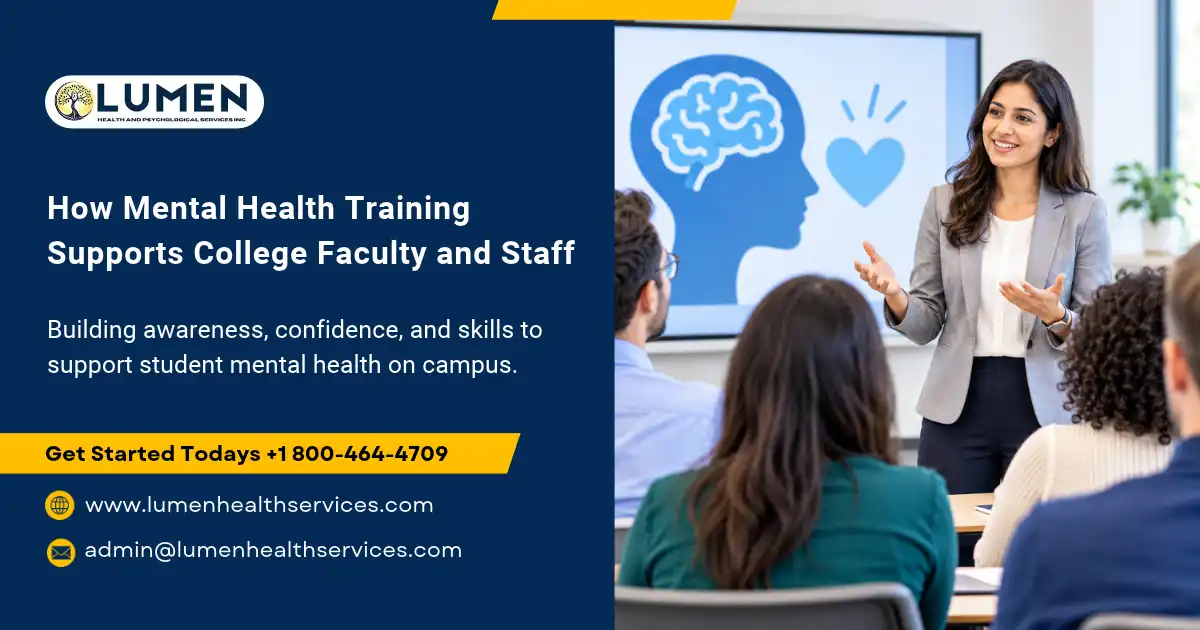
Mental health training for college faculty and staff can enhance awareness, build confidence, and assist educators who may suspect that a student is experiencing emotional and/or psychological issues. The programs are designed to educate faculty members, professors, administrators, and campus employees about warning signs, how to start a dialogue with students, and to link students to mental health services.
College students experience various academic, social, financial, and personal challenges. The early signs of changes in student conduct, attendance, participation in class or academic achievement are frequently observed by faculty and staff. But change is only identified and understood when it is appropriately known and prepared for.
Access to professional mental health therapy can help students address emotional challenges, develop healthier coping strategies, and improve their overall well-being. Creating a supportive college environment also encourages students to discuss their concerns and seek professional help when necessary.
Why Mental Health Training Matters in Colleges
College life adds new responsibilities, academic expectations, social adjustments, and career-related pressures. Some students may feel anxious, depressed, unwell, lonely or struggle to settle into the campus life.
Students are engaged with faculty and staff on a regular basis in a variety of ways, including lectures, academic advising, student services, and campus activities. These interactions can enable them to become aware of changes that may signal a student’s struggle.
It is easy to get frustrated with employees who will not know how to respond to a student or where to ask for help from.
Mental health training helps college employees understand common mental health concerns, recognize potential warning signs, communicate with empathy, and identify appropriate support resources.
It also fosters an environment that encourages conversation over mental health issues instead of discouraging it.
Also Read: Academic Stress and Teen Anxiety
Do Mental Health Training Programs Actually Work?
Yes. Mental health training programmes have been shown to enhance not only knowledge and confidence in supporting people with emotional needs but also readiness.
A study published in the Journal of American College Health evaluated a gatekeeper training program involving 335 faculty members, staff, and students. There were significant gains in learning and confidence to respond to students in distress in relation to suicide risk factors. However, some improvements declined during the three-month follow-up, highlighting the importance of refresher sessions.
The I CARE training program, also at a university-based level, claimed that the participants improved their knowledge and preparedness for intervention, and that this increased above pre-training levels at follow-up up to 15 months later.
The results indicated that structured mental health education program can help college staff members feel more confident in their response to students’ needs.
But, training does not necessarily improve mental health outcomes. Continuous education, institutional support, counselling resources which are easily available and proper referral system are also necessary for its effectiveness.
What Do Faculty and Staff Learn Through Mental Health Training?
A well-designed mental health training program focuses on practical knowledge and communication skills that employees can apply in their daily interactions.
1. Recognizing Signs of Mental Health Concerns
Faculty and staff learn to recognize possible signs of emotional distress, including changes in classroom participation, social withdrawal, unusual behavior, difficulty concentrating, and declining academic performance.
These changes do not automatically indicate a mental health condition, but they may suggest that a student needs additional support.
2. Understanding Common Mental Health Conditions
Training introduces participants to common concerns such as anxiety, depression, stress, trauma-related difficulties, and emotional distress.
This knowledge helps employees better understand student experiences without making assumptions or attempting to diagnose mental health conditions.
3. Communicating With Students Effectively
Approaching a student who may be struggling can feel uncomfortable. Training helps faculty and staff develop supportive communication skills, including active listening, respectful conversations, and nonjudgmental responses.
These skills can make it easier for students to discuss their concerns and consider seeking professional assistance.
4. Understanding Referral and Support Resources
Faculty and staff should know how to connect students with campus counseling centers, mental health professionals, crisis services, and other appropriate resources.
Training also clarifies when an immediate referral or emergency response may be necessary.
5. Maintaining Professional Boundaries
College employees are not expected to act as therapists or diagnose students. Training helps them understand their responsibilities, maintain appropriate professional boundaries, and recognize when a concern requires professional intervention.
How Mental Health Training Benefits College Campuses
Mental health training can benefit individual employees as well as the wider college community.
Improved Early Recognition: Employees may become more aware of changes in student behavior and recognize when someone could benefit from additional support.
Greater Staff Confidence: Training provides practical guidance that can reduce uncertainty when employees need to have sensitive conversations with students.
Reduced Mental Health Stigma: Education can challenge common misconceptions and encourage more respectful discussions about psychological health.
Better Access to Support: Employees who understand referral procedures can help students identify appropriate counseling and mental health resources.
A More Supportive Campus Environment: When faculty and staff understand mental health concerns, they can contribute to a learning environment that recognizes students’ emotional and academic needs.
These benefits depend on how training is implemented and whether students can access appropriate professional services.
Also Read: 10 Benefits of Mental Health Therapy
What Makes a Mental Health Training Program Effective?
Not every training program produces the same results. Colleges should focus on programs that provide practical knowledge, relevant examples, and opportunities to develop communication skills.
Several elements can make training more effective:
Practical learning activities: Realistic campus situations and role-playing exercises help employees practice responding to student concerns.
Regular refresher sessions: Follow-up training reinforces knowledge and helps participants maintain their confidence.
Role-specific education: Professors, academic advisors, administrators, and student support employees may need different training based on their responsibilities.
Clear referral procedures: Employees should understand how to connect students with appropriate mental health professionals and emergency resources.
Professional guidance: Training developed or delivered with input from qualified mental health professionals can provide more reliable information.
Program evaluation: Colleges should assess changes in knowledge, confidence, referral awareness, and participants’ ability to apply what they have learned.
A 2024 scoping review of faculty training in higher education also highlighted the importance of recognizing student distress, understanding professional boundaries, developing supportive skills, and knowing how to access student services.
What Are the Limitations of Mental Health Training?
Mental health training can increase awareness and preparedness, but it has its own limits.
First, attending a training session does not make faculty members or campus employees mental health professionals. They should not make diagnoses, conduct clinical treatment or be responsible for managing complex psychological issues.
Secondly, the workshop can’t necessarily yield long-term benefits. Participants can forget important information or feel less confident over time without continued learning.
Third, providing a training alternative will not substitute for the availability of mental health services. There are situations where students continue to face challenges in accessing counselling services due to long waiting lists, financial issues, stigma or lack of resources and services on campus.
Training needs should be therefore integrated with clear referral pathways, easy access to professional support, and continuous mental health awareness campaigns.
How Colleges Can Build a More Supportive Mental Health Environment
A supportive campus environment is not achieved through occasional training sessions. Colleges need to have a continuous strategy that takes into account the needs of both students and staff.
Faculty and staff should receive opportunities to participate in mental health education throughout the academic year. Institutions can also make counseling resources easier to access, communicate available support services clearly, and establish procedures for responding to students experiencing emotional distress.
It’s also crucial to acknowledge faculty and staff mental health needs. They may be impacted by responsibilities and expectations in the classroom, at work, in administrative duties, and their personal lives.
Providing employees with access to appropriate mental health resources can contribute to a healthier workplace and a more supportive educational community.
Conclusion
Mental health training programs for college faculty and staff can make a meaningful difference by improving mental health awareness, strengthening communication skills, and helping employees recognize when students may need professional support.
However, successful programs require continued education, practical training, clear referral procedures, and access to qualified mental health professionals. Training should be viewed as one part of a broader campus mental health strategy rather than a replacement for professional care.
When colleges invest in mental health education and accessible support systems, they can create environments where students and employees feel more comfortable discussing their concerns and seeking help when needed.
Lumen Health & Psychological Services recognizes the importance of accessible mental health support. Individuals experiencing anxiety, depression, relationship difficulties, or emotional challenges can explore professional therapy options to receive guidance and support.
Frequently Asked Questions
Yes. Research suggests that mental health training can improve faculty members’ knowledge, confidence, and ability to recognize students who may need support.
Mental health gatekeeper training teaches individuals how to recognize warning signs of emotional distress, approach someone with concern, and connect them with appropriate professional resources.
Colleges should provide initial training and periodic refresher sessions to reinforce knowledge, maintain confidence, and communicate updated referral procedures.
Faculty members can recognize potential warning signs, but they should not diagnose students. Mental health assessments and diagnoses should be handled by qualified professionals.
No. Training helps faculty and staff recognize concerns and guide students toward appropriate support. It does not replace counseling, psychological assessment, or professional mental health treatment.
Also Read:
Depression Specialist Near Sacramento, CA
How Poor Sleep Affects Mental Health, Memory, and Learning
What Is the 3-3-3 Rule in Dating?
The Mental Health Treatment Gap in the US