

Brainspotting therapy in Sacramento, CA, is a trauma-focused therapeutic approach that uses specific eye positions to help individuals process difficult emotions, distressing memories, and physical responses to stress. Some mental health practitioners use it to cope with emotions of anxiety, grief and depression arising from trauma.
Some Sacramento mental health professionals provide brainspotting therapy sessions, including those that provide online appointments across California. Understanding how the approach works, its potential benefits, costs, and limitations can help you decide whether it is suitable for your mental health needs.
What Is Brainspotting Therapy?
Brainspotting, developed by psychologist Dr. David Grand in 2003, is a psychotherapy technique. It is based on his research into Eye Movement Desensitization and Reprocessing (EMDR) and addresses the connection between eye movements, emotional reaction, and physical sensations.
In brainspotting, a therapist assists in discovering a certain eye position that seems to be connected to an emotional or bodily reaction by the client.
The client keeps his/her visual gaze fixed on that position and becomes aware of thoughts, feelings, memories, and sensations in the body.
During the treatment, some practitioners also utilize bilateral sounds, which are alternate audio that is provided via headphones.
The theory behind brainspotting is that focused visual attention may facilitate processing in the emotional pathways, which are deeper brain structures. The mechanisms in the brain that underlie these proposed explanations, however, have not been definitively established.
What Mental Health Conditions Is Brainspotting Used For?
Brainspotting practitioners use the approach with individuals experiencing various emotional and psychological concerns, including:
- Trauma and PTSD: Processing distressing memories and trauma-related emotional responses.
- Childhood trauma: Addressing emotional reactions associated with difficult early experiences.
- Anxiety: Working with distressing thoughts, emotional triggers, and physical tension.
- Depression: Addressing difficult emotional experiences that may contribute to depressive symptoms.
- Grief and loss: Processing emotions connected with significant losses.
- Performance anxiety: Managing stress associated with work, sports, or public performance.
- Somatic symptoms: Exploring physical sensations associated with emotional distress.
Although brainspotting is used for these concerns, its effectiveness has not been established equally across conditions. Research remains limited compared with more extensively studied psychotherapies.
How Does Brainspotting Therapy Work?
Brainspotting therapy combines focused eye positioning with awareness of emotional and physical responses.
Instead of relying entirely on verbal discussion, the therapist encourages the client to notice how their body responds to specific thoughts, memories, or experiences.
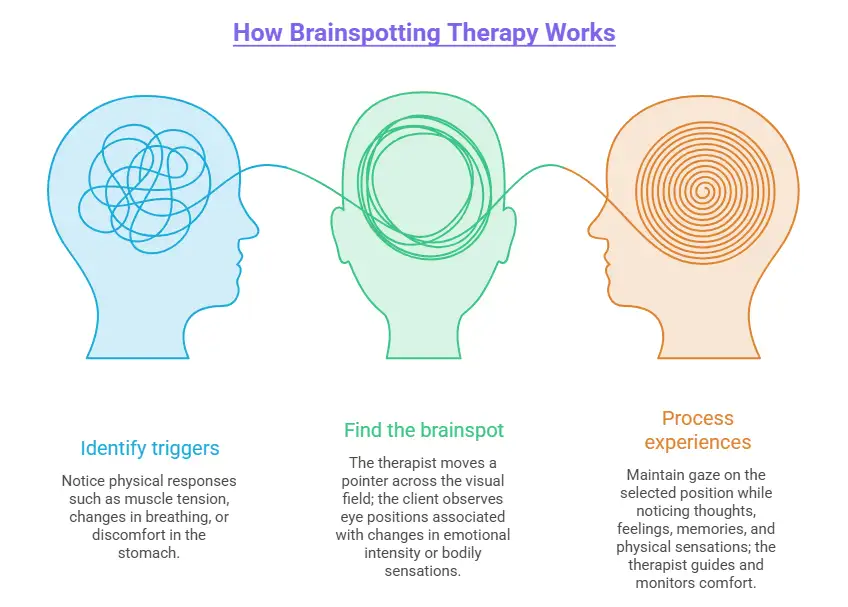
The process generally involves three stages.
1. Identifying Emotional Triggers
The therapist begins by helping the client identify a particular concern, distressing memory, or emotional experience.
The client may notice physical responses such as muscle tension, changes in breathing, or discomfort in the stomach.
2. Finding the Brainspot
The therapist slowly moves a pointer across the client’s visual field.
The client observes whether certain eye positions are associated with changes in emotional intensity or bodily sensations.
The therapist then identifies a position that may be relevant to the concern being addressed.
3. Processing Emotional Experiences
The client maintains their gaze on the selected position while noticing thoughts, feelings, memories, and physical sensations.
The therapist provides guidance and monitors the client’s comfort throughout the process.
Some individuals experience strong emotions during treatment, while others notice more subtle responses.
The goal is to provide a supportive environment for exploring distressing experiences without requiring detailed verbal descriptions at every stage.
What Happens During a Brainspotting Therapy Session?
A brainspotting therapy session commonly lasts approximately 50–90 minutes, although appointment lengths vary by provider.
Sessions generally follow an individualized process based on the client’s symptoms, history, and treatment goals.
Initial Assessment
The therapist discusses the client’s mental health concerns, previous experiences, and expectations.
This helps determine whether brainspotting is appropriate or whether another therapeutic approach may be more suitable.
Identifying the Treatment Focus
The client identifies an emotional concern, memory, or physical sensation they want to address.
The therapist may ask the client to rate their current level of distress.
Guided Eye Positioning
The therapist uses a pointer or another visual reference to identify an eye position associated with the client’s emotional response.
The client maintains visual focus while observing internal experiences.
Emotional Processing
The therapist supports the client as thoughts, emotions, or physical sensations arise.
Some clients may speak about their experiences, while others spend more time quietly observing their responses.
Session Closure
The therapist helps the client return their attention to the present and discusses any reactions experienced during treatment.
Clients may receive guidance about managing temporary emotional sensitivity or fatigue afterward.
How many sessions are needed?
There is no standard number of brainspotting sessions that works for everyone. Treatment duration depends on symptom severity, individual needs, therapeutic goals, and response to treatment.
Can Brainspotting Therapy Help With Depression?
Brainspotting therapy for depression may be considered when depressive symptoms are associated with traumatic experiences, emotional distress, or difficult memories.
Depression can affect mood, energy, motivation, sleep, concentration, and relationships.
Some individuals also experience feelings of guilt, hopelessness, or emotional disconnection.
Brainspotting practitioners aim to help clients explore distressing emotional experiences that may contribute to these symptoms.
Potential Benefits for Depression
Brainspotting may provide opportunities to:
- Recognize emotional triggers associated with depressive symptoms.
- Explore distressing memories and emotional responses.
- Increase awareness of physical sensations associated with stress.
- Address difficult feelings connected with past experiences.
- Develop a greater understanding of emotional patterns.
However, brainspotting is not an established first-line treatment for major depressive disorder.
Evidence supporting its effectiveness for depression is currently limited, and additional controlled studies are needed.
Established depression treatments include cognitive behavioral therapy (CBT), interpersonal psychotherapy, and medication when appropriate.
People experiencing persistent depression should receive an assessment from a qualified mental health professional before choosing a treatment approach.
Is Brainspotting Therapy Available Online in Sacramento?
Yes. Some mental health professionals licensed in California and have completed the appropriate training and education to offer brainspotting therapy online do so.
Online brainspotting is similar to in-person brainspotting, only with some virtual adjustments.
The therapist and client meet via a secure video platform and visual cues can be utilized for eye positioning.
How Does Online Brainspotting Therapy Work?
The therapist, during the virtual session, first discusses the client’s concerns and will determine if online treatment is appropriate.
Then, the therapist helps the client to identify emotional responses and choose a visual focus point.
The client is able to keep the eyes fixed and observe thoughts, feelings and bodily sensations.
Throughout the session, the therapist monitors the client’s reactions and provides support.
Benefits of Online Brainspotting Therapy
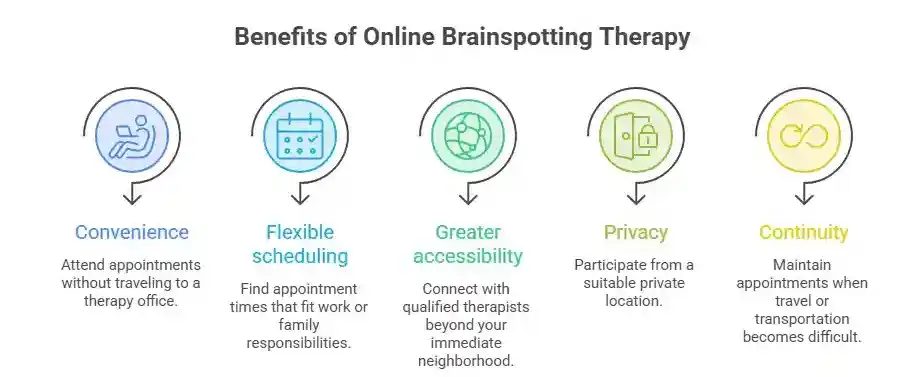
Online sessions may offer several practical advantages:
- Convenience: Attend appointments without traveling to a therapy office.
- Flexible scheduling: Find appointment times that fit work or family responsibilities.
- Greater accessibility: Connect with qualified therapists beyond your immediate neighborhood.
- Privacy: Participate from a suitable private location.
- Continuity: Maintain appointments when travel or transportation becomes difficult.
Online therapy can be useful for people living in Sacramento, Citrus Heights, Roseville, Folsom, Elk Grove, and surrounding California communities.
However, virtual brainspotting may not be suitable for everyone, particularly individuals requiring intensive clinical monitoring or immediate crisis support.
Research comparing online and in-person brainspotting outcomes remains limited.
Brainspotting vs. EMDR: Which Therapy Is Better?
Brainspotting and Eye Movement Desensitization and Reprocessing (EMDR) are both used by therapists working with trauma-related concerns.
Although they share some similarities, their treatment methods and levels of scientific support differ.
| Feature | Brainspotting Therapy | EMDR Therapy |
|---|---|---|
| Main technique | Fixed eye positions | Bilateral stimulation within a structured protocol |
| Treatment approach | Flexible and body-focused | Structured treatment phases |
| Verbal communication | May involve limited talking | Includes assessment and guided processing |
| Primary applications | Trauma-related distress and emotional concerns | PTSD and trauma-related symptoms |
| Research evidence | Limited and emerging | Extensive evidence for PTSD |
| Online availability | Offered by some trained therapists | Offered by some trained therapists |
Which Is Better, EMDR or Brainspotting?
EMDR currently has stronger scientific evidence for treating PTSD than brainspotting. Major clinical guidelines recommend EMDR as an evidence-based treatment for PTSD.
Brainspotting has shown promising results in some preliminary studies, but more rigorous research is needed to determine its effectiveness.
The better treatment option depends on the individual’s symptoms, clinical history, preferences, and treatment goals.
A qualified therapist can explain the available approaches and help determine which treatment is appropriate.
How Much Does a Brainspotting Session Cost in Sacramento?
The price of a brainspotting treatment session in Sacramento will rely on the therapist’s skills, the length of the session, the therapist’s practice location, and whether the therapist accepts insurance.
Private-pay Sacramento psychotherapy sessions can range from about 100–250 or higher per session. This is a representative planning range and is not a confirmed market average for brainspotting.
An extended appointment or sessions for specialized clinicians can be more expensive.
Brainspotting Therapy Speciality
What Affects Brainspotting Therapy Costs?
Several factors influence pricing:
Therapist experience: Clinicians with advanced training or specialized experience may charge higher fees.
Session duration: Longer appointments generally cost more than standard therapy sessions.
Treatment setting: In-person and virtual appointments may have different fees depending on the provider.
Insurance participation: In-network providers may offer lower out-of-pocket costs for covered psychotherapy services.
Private-pay arrangements: Some therapists offer sliding-scale fees or reduced-cost appointments.
Before scheduling, request the therapist’s current session fee and ask whether additional charges apply.
Is Brainspotting Covered by Insurance?
Brainspotting therapy may be covered by insurance when it is provided as part of medically necessary psychotherapy by an eligible mental health professional.
However, insurance coverage for brainspotting is not guaranteed.
Insurance companies generally evaluate psychotherapy claims according to factors such as diagnosis, medical necessity, provider network status, and billing requirements.
Brainspotting itself may not have a separate insurance billing code.
Questions to Ask Your Insurance Provider
Before beginning treatment, confirm:
- Does my plan cover outpatient psychotherapy?
- Is the therapist in my insurance network?
- Do I need a referral or prior authorization?
- What is my copay, coinsurance, or deductible?
- Are telehealth psychotherapy appointments covered?
- Are there restrictions affecting the proposed treatment?
The therapist’s billing office may also help explain available payment options.
Who Should Not Do Brainspotting Therapy?
Brainspotting is not appropriate for every individual or every clinical situation.
A qualified mental health professional should assess the person’s symptoms, emotional stability, safety needs, and treatment history before recommending this approach.
Situations Requiring Additional Assessment
Acute mental health crises: Individuals experiencing immediate safety concerns or severe psychiatric symptoms may require crisis intervention or stabilization before trauma-focused processing.
Severe emotional dysregulation: People who become easily overwhelmed by distressing memories may need additional preparation and coping strategies.
Significant dissociative symptoms: Individuals experiencing substantial dissociation may require specialized assessment and a carefully adapted treatment plan.
Certain complex psychiatric conditions: People experiencing active psychosis, mania, or other severe symptoms may need stabilization and coordinated treatment before considering brainspotting.
Discomfort with focused visual techniques: Individuals with visual, neurological, or other medical concerns should discuss appropriate adaptations with their clinician.
These situations are not necessarily permanent exclusions. Suitability depends on individual clinical circumstances.
A licensed therapist can help determine whether brainspotting, another trauma-focused therapy, or a different treatment approach is appropriate.
How to Find Brainspotting Therapy in Sacramento, CA
Finding a qualified brainspotting therapist involves more than choosing the nearest mental health practice.
Sacramento-area residents may find providers offering in-person appointments, virtual sessions, or a combination of both.
When comparing treatment options, consider the following factors.
Verify Professional Credentials
Choose a mental health professional who holds an appropriate California license and has completed relevant brainspotting training.
Ask about their clinical experience with trauma, depression, anxiety, or other concerns related to your treatment goals.
Confirm Brainspotting Training
Not every trauma therapist provides brainspotting.
Ask whether the clinician has completed specialized training and how frequently they use the approach.
Compare Online and In-Person Sessions
Some therapists provide appointments at offices in Sacramento and surrounding communities, while others offer telehealth throughout California.
Choose a setting that supports privacy, consistent attendance, and your clinical needs.
Discuss Treatment Expectations
Ask how the therapist evaluates progress, manages emotional distress during sessions, and determines whether treatment should continue or change.
Review Costs and Insurance
Confirm session fees, insurance participation, cancellation policies, and payment arrangements before your first appointment.
Choosing a therapist with appropriate qualifications and experience is more important than selecting a treatment based solely on convenience.
Brainspotting and Cerebral Online Therapy: Are They the Same?
People searching for brainspotting cerebral online therapy may be comparing a specialized psychotherapy approach with online mental health care.
Brainspotting is a therapeutic technique involving focused eye positioning and emotional awareness.
Cerebral, by comparison, is a virtual mental health care platform.
These terms describe different things.
Online mental health services may provide psychotherapy, psychiatric care, or other treatment options depending on the platform and available clinicians.
However, access to online therapy does not automatically mean brainspotting is offered.
Before booking a virtual appointment, confirm whether the clinician has specific brainspotting training and whether the treatment is available through telehealth.
When Should You Consider Professional Mental Health Support?
You may benefit from professional mental health support when emotional difficulties begin affecting your daily life.
Common reasons to seek therapy include:
- Persistent sadness or loss of motivation
- Frequent anxiety or overwhelming stress
- Distressing memories or trauma-related symptoms
- Difficulty maintaining healthy relationships
- Sleep disturbances associated with emotional concerns
- Feelings of guilt, shame, or emotional disconnection
- Difficulty managing major life changes
You do not need to identify a particular therapy technique before contacting a mental health professional.
An initial consultation can help clarify your symptoms, treatment goals, and available options.
Get Personalized Mental Health Support in Sacramento, CA
Brainspotting therapy is one approach used to address trauma-related emotional distress, anxiety, and difficult experiences. Although research is still developing, understanding its techniques, costs, and treatment considerations can help you make informed decisions.
If you are experiencing depression, anxiety, emotional stress, or relationship difficulties, speaking with a licensed therapist can help you identify appropriate treatment options.
Lumen Health & Psychological Services provides individual therapy and mental health counseling for adults seeking professional support in Sacramento, Citrus Heights, and surrounding California communities.
Our therapists work with clients to understand their concerns, develop personalized treatment goals, and identify suitable therapeutic approaches.
FAQ’s
Brainspotting is used by some therapists to address anxiety, trauma-related distress, and depressive symptoms. Preliminary findings suggest potential benefits, but research remains limited. It should not replace established treatments without appropriate clinical guidance.
There is no fixed number of sessions. Some individuals participate in a relatively short course of treatment, while others require longer-term therapy depending on their symptoms and goals.
Yes. Some trained therapists provide brainspotting through secure video appointments. Online treatment requires appropriate assessment, privacy, reliable technology, and a suitable therapeutic environment.
Brainspotting does not involve physical procedures or invasive treatment. However, focusing on distressing memories or emotions may temporarily cause emotional discomfort or physical tension.
Not necessarily. Brainspotting may involve less detailed verbal discussion than some traditional therapies. Clients can focus on emotions and bodily sensations while communicating with the therapist as needed.
Some therapists use brainspotting to address emotional responses associated with childhood trauma. However, research supporting its effectiveness for this specific concern remains limited.
A qualified therapist can evaluate your symptoms, mental health history, emotional readiness, and treatment goals. They can also explain other evidence-based treatment options.
Brainspotting may be available through trained clinicians serving Citrus Heights, Roseville, Sacramento, and surrounding communities. Some California-licensed therapists also provide virtual appointments. Confirm current availability and qualifications directly with each provider.
Also Read:
Brainspotting Therapy Services for Deep Emotional Healing
What Is the Difference Between a Counselor and a Therapist?
Best In-Person Mental Health Care in Citrus Heights, CA
How Family Therapy Can Help When Communication Breaks Down
Individual Therapy for Adults in Northern California