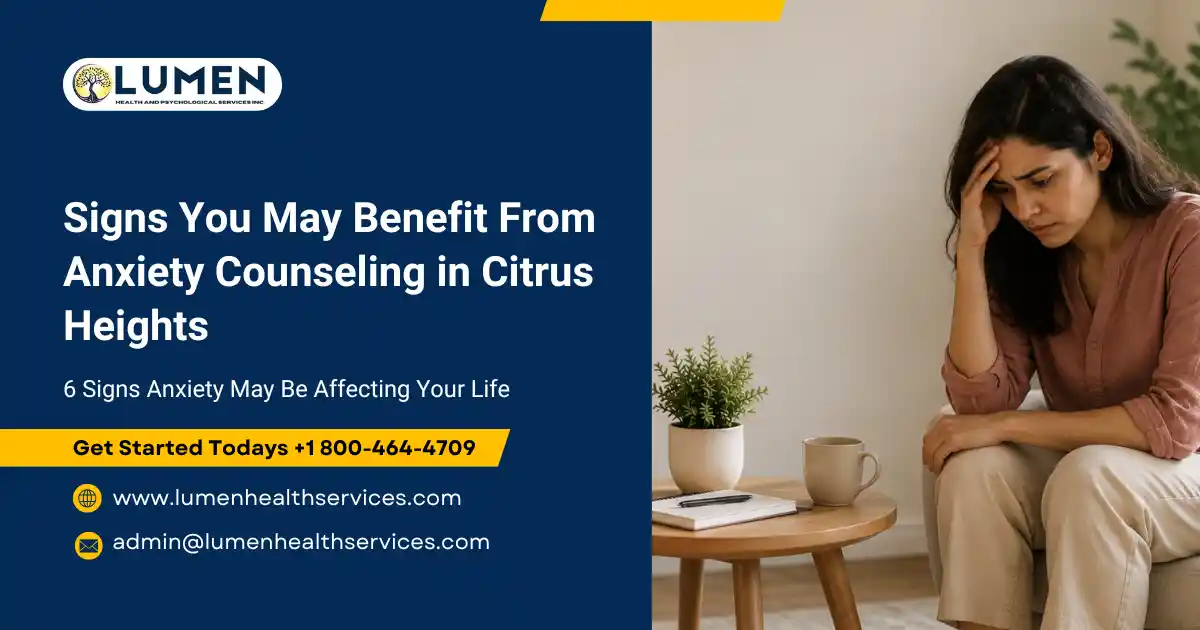
Anxiety counseling can help you if you have trouble sleeping, physical symptoms, avoidance, worry, or anxiety that is interfering with your life more often than not. Some of the signs you might need Anxiety Counseling in Citrus Heights include an inability to control worry, often experiencing fear or tension, panic symptoms, trouble concentrating, and changes in daily habits.
Anxiety therapy can educate you on what causes your symptoms, and teach you practical strategies to help you control them. When anxiety has become a problem in your work, relationships, sleep or quality of life, please consult with a trained therapist to discuss the next step.
Signs You May Need Anxiety Counseling
1. Constant Worry That Feels Difficult to Control
Everyone worries sometimes. When you are constantly worried about your work, health, money, family, relationships, or daily activities, and you find it hard to stop worrying, it becomes a concern.
Symptoms of generalized anxiety disorder include excessive worry, restlessness, irritability, difficulty concentrating, fatigue, muscle tension and sleep disturbances. If these symptoms persist and are interfering with life, you may want to meet with an anxiety therapist to learn more about what’s going on and how to treat it.
2. Physical Symptoms of Anxiety Keep Appearing
You can feel anxiety in your body as well as your mind. Some people feel a rapid heart rate, tension in muscles, headaches, stomach pain, sweating, shaking, tiredness, or trouble sleeping.
Having physical symptoms doesn’t necessarily mean you have an anxiety disorder. Persistent or new physical concerns should be directed to medical attention because it may be caused by medical conditions.
3. You Avoid Things Because You Feel Anxious
One of the most obvious indicators of anxiety in your life is avoidance. You may find you avoid social events, driving, work obligations, appointments, public areas, challenging conversations, or hobbies.
Avoidance can reduce anxiety temporarily, but it can also strengthen fear over time. Anxiety therapy can assist you to comprehend this pattern and discover a much healthier reaction to it.
4. Anxiety Is Affecting Your Sleep
Anxiety and sleep problems often occur together. You might think about everything that could go wrong and be unable to sleep, wake up during the night or feel tired when you wake up.
If you don’t sleep well, you will find it harder to deal with worry and stress the next day. Treating anxiety symptoms and sleep patterns that contribute to sleep problems can be a valuable component of treatment.
5. Anxiety Is Affecting Work or Relationships
Consider professional support if anxiety makes it harder to concentrate, complete responsibilities, communicate with people, maintain relationships, or participate in normal activities.
You do not have to wait until anxiety becomes severe. When symptoms consistently interfere with your quality of life, anxiety counseling can provide a structured way to address them.
6. You Experience Panic Attacks or Intense Fear
Panic attacks can cause sudden and intense fear along with symptoms such as rapid heartbeat, sweating, trembling, dizziness, shortness of breath, chest discomfort, or a feeling of losing control.
After a panic attack, some people begin worrying about having another one. This can lead to avoidance and further anxiety. Cognitive behavioral therapy, commonly called CBT, is an evidence-based treatment used for panic disorder and several other anxiety disorders.
Also Read: Psychologist for Anxiety and Depression in Citrus Heights, CA
When Is Anxiety More Than Normal Stress?
Normal stress will typically have an identifiable trigger and be more manageable when that trigger is addressed. Anxiety can be a problem if it persists in the absence of any direct threat, is hard to manage, or disrupts normal functioning.
A mental health professional can evaluate the symptoms and decide if they are from generalized anxiety disorder, social anxiety disorder, panic disorder, a different mental health issue, or a natural reaction to stress.
How Does Anxiety Counseling Help?
Anxiety counseling is based on thoughts, behaviours, feelings and circumstances that lead to anxiety. CBT can help you recognize unhelpful thinking patterns and learn to respond to stressful situations in a more positive way.
Gradual exposure to situations which you have been avoiding may also be part of therapy. This method can over time help to decrease fear and increase confidence in being able to handle uncomfortable feelings.
Other evidenced-based methods, such as acceptance and commitment therapy, might also be suitable, depending on your symptoms and treatment objectives.
Everyone has a different treatment timeline. There is some improvement in people after a few sessions and others after more long-term therapy. Your treatment plan should take into account the severity of your symptoms, your goals, your history, and how you react to treatment.
When Should You Seek Anxiety Counseling in Citrus Heights?
Anxiety counselling can be beneficial for individuals experiencing anxiety that is affecting their sleep, interpersonal relationships, work and school, responsibilities or fun in daily activities.
Don’t worry, you don’t need to have an official anxiety disorder diagnosis before talking with a therapist. Counselling can be helpful if you have ongoing worry, stress, fear or avoidance, and help you find out if professional help is needed.
Lumen Health & Psychological Services offers anxiety therapy to adults in Citrus Heights and anxiety therapy via telehealth in California. If anxiety is starting to be a problem, reach out to Lumen Health & Psychological Services to talk about your concerns and treatments that are available.
Available Anxiety Therapists
Elijah Gildea, LMFT Provides individualized therapy using Cognitive Behavioral Therapy (CBT) and psychodynamic methods.
Margit Ilgen, LMFT Offers warm, collaborative care for stress, life changes, and anxiety.
Jennifer Ferguson, LPCC Specializes in compassionate support for teens and adults dealing with anxiety and trauma.
Kristen Knight, LMFT Combines evidence-based techniques with options like brainspotting.
Pavan Batth, LMFT Focuses on building resilience and practical coping tools for emotional distress.
Iris Gildea, AMFT Uses CBT, mindfulness, and Acceptance and Commitment Therapy (ACT).
Conclusion
If anxiety is affecting your sleep, relationships, work, or ability to enjoy daily life, you do not have to manage it alone. Anxiety counseling can help you understand your symptoms, develop healthier coping skills, and work toward meaningful improvement.
Lumen Health & Psychological Services provides anxiety therapy for adults in Citrus Heights, with telehealth options available across California. Contact our team to discuss your concerns and take the next step toward managing anxiety.
FAQ’s
Persistent worry, physical anxiety symptoms, avoidance, panic attacks, sleep problems, difficulty concentrating, and problems with work or relationships can indicate that professional anxiety counseling may be helpful.
Consider seeking help when anxiety continues over time, feels difficult to control, or interferes with your daily activities, relationships, sleep, work, or overall quality of life.
Yes. Evidence-based psychotherapy can reduce anxiety symptoms and improve coping. CBT is one of the most established psychological treatments for anxiety disorders and can help change unhelpful thoughts and behaviors.
CBT is a well-supported treatment for many anxiety disorders. Depending on your symptoms and goals, a therapist may also use exposure-based techniques, ACT, or other appropriate evidence-based approaches.
The length of anxiety therapy varies. Some people improve within several sessions, while others need longer treatment. Your therapist can adjust treatment based on your symptoms, goals, progress, and individual circumstances.
Yes. Anxiety can contribute to muscle tension, rapid heartbeat, sweating, trembling, stomach discomfort, fatigue, headaches, and sleep difficulties. Persistent or severe physical symptoms should also receive appropriate medical evaluation.
Online therapy can provide access to evidence-based mental health treatment for people who prefer telehealth or cannot easily attend in-person sessions. The appropriate format depends on your symptoms, preferences, and clinical needs.
Anxiety deserves professional attention when it becomes persistent, difficult to control, or disruptive to your daily life. A therapist can help assess your symptoms and determine appropriate next steps.
Also Read:
How Family Therapy Can Help When Communication Breaks Down
Individual Therapy for Adults in Northern California